
University of Miami
Overview
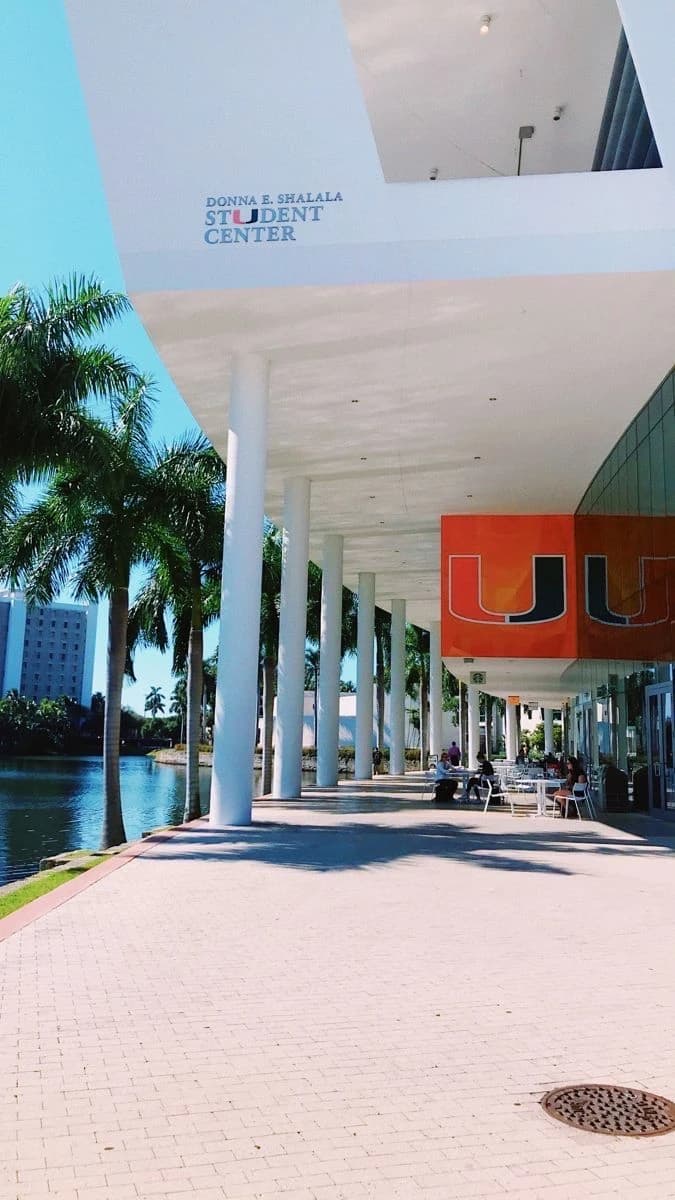
The University of Miami is a private research university located in Coral Gables, Florida, just southwest of downtown Miami. Founded in 1925, it serves undergraduate, graduate, and professional students across schools and colleges that include arts and sciences, business, engineering, law, medicine, marine science, and music. The university is known for its research activity, particularly in marine and atmospheric science, medicine, and health-related fields, as well as for its athletics programs competing in the Atlantic Coast Conference. Its South Florida location attracts students interested in international studies, environmental research, public health, business, and careers connected to the Americas and global markets.
Admission Requirements
With a 18.9% acceptance rate, University of Miami is selective. Admitted students usually have strong academic records, competitive test scores, and consistent involvement in extracurricular activities. While admission is competitive, applicants who demonstrate solid academic preparation and clear interests have a realistic chance of admission.
Cost & Financial Aid
History
The University of Miami was chartered in 1925 during South Florida’s land boom, with the goal of creating the region’s first institution of higher learning. It opened its doors in 1926 in Coral Gables, Florida, enrolling its first class shortly before the devastating Great Miami Hurricane of 1926 and the collapse of the land boom created financial challenges. Under the leadership of its first president, Bowman Foster Ashe, the University of Miami stabilized and gradually expanded its academic programs. In the mid-20th century, the university added professional schools, including law and medicine, and developed a growing research profile. Over the decades, the University of Miami expanded its campus, strengthened its health system, and increased national visibility through research and athletics. By its centennial era, the University of Miami had evolved into a comprehensive private research university serving students from across the United States and internationally.
Campus life
Gender
Race & ethnicity
University of Miami has a 11:1 student-to-faculty ratio, providing a balance between personalized instruction and a broader classroom environment. Students can expect opportunities to engage with professors while also benefiting from diverse perspectives in class discussions.
Applying to University of Miami with Unive
Applying to University of Miami involves a holistic admissions process that considers academic performance, standardized testing policies, extracurricular involvement, and personal essays. As a private research university in Coral Gables, University of Miami attracts students from across the United States and abroad, making admission competitive. Prospective students should review application deadlines, program-specific requirements, and opportunities such as early decision when planning their submission.
Financial Aid at University of Miami
University of Miami offers need-based financial aid, merit scholarships, and federal and state assistance programs to help make attendance more affordable. Students applying to University of Miami are encouraged to submit the FAFSA and any required institutional forms on time to maximize eligibility. Scholarships may be awarded based on academic achievement, talent, or leadership, and financial aid packages vary according to individual circumstances.
Build a Stronger Application with Unive
Unive helps students prepare competitive applications to University of Miami by providing AI-powered guidance on essays, extracurricular strategy, and overall application positioning. Students can refine personal statements, identify meaningful activities, and explore financial aid discovery tools. With structured feedback and planning support, Unive helps applicants present a clear and cohesive application to University of Miami.
Ready to Apply to University of Miami?
Join thousands of students using Unive to craft standout applications for their dream schools.
Add to My College List


Is the information about University of Miami accurate and helpful?