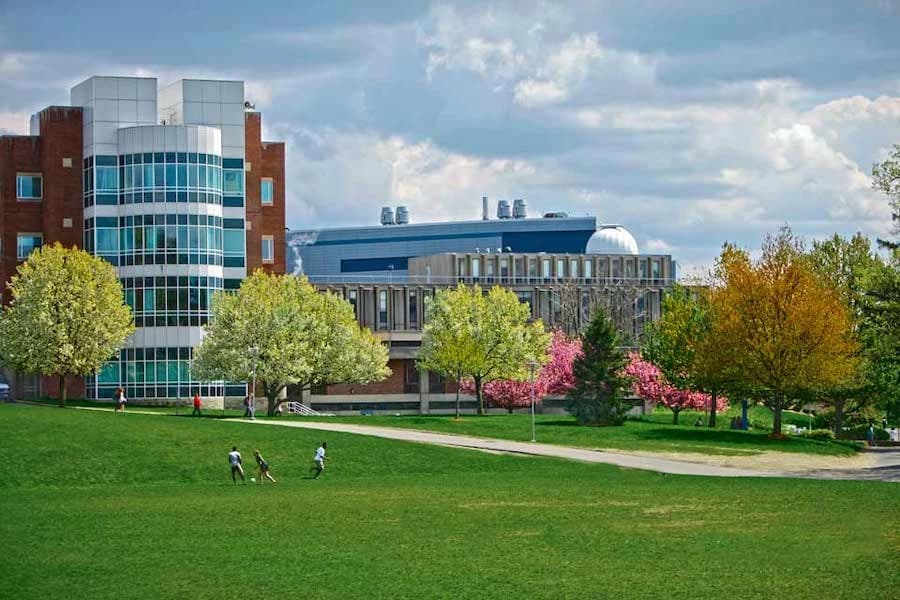

Brandeis University
Overview
Brandeis University is a private research university located in Waltham, Massachusetts, within the Greater Boston area. Founded in 1948, it was established as a nonsectarian institution sponsored by the American Jewish community and named after U.S. Supreme Court Justice Louis D. Brandeis. The university is classified as an R1 doctoral institution with very high research activity and is a member of the Association of American Universities. Brandeis offers undergraduate, graduate, and professional programs across the arts and sciences, social policy, business, and international studies. It is known for its emphasis on social justice, interdisciplinary study, and close faculty-student engagement, attracting students interested in research, public affairs, and the liberal arts.
Admission Requirements
With a 40.5% acceptance rate, Brandeis University is moderately selective. Applicants are expected to show good academic performance and readiness for college-level coursework. Students with consistent grades, extracurricular involvement, and a well-prepared application are typically competitive for admission.
Cost & Financial Aid
History
Brandeis University was founded in 1948 in Waltham, Massachusetts, by leaders of the American Jewish community at a time when discriminatory quotas limited access to higher education. Established on the site of the former Middlesex University, Brandeis University was created as a nonsectarian, coeducational institution and named for U.S. Supreme Court Justice Louis D. Brandeis. Abram L. Sachar became the first president in 1948 and helped shape its early academic structure. In 1961, Brandeis University earned Phi Beta Kappa accreditation and founded the Rose Art Museum, strengthening its academic and cultural profile. The university later joined the Association of American Universities in 1985, reflecting its growing research activity. Over the decades, Brandeis University expanded its graduate programs and research initiatives, developing into a nationally recognized private research university while maintaining its founding commitment to academic excellence and inclusion.
Campus life
Gender
Race & ethnicity
Brandeis University has a 10:1 student-to-faculty ratio, which means small class sizes and close interaction with professors. Students often benefit from more personalized attention, accessible faculty mentorship, and greater opportunities for discussion and research collaboration.
Applying to Brandeis University with Unive
Applying to Brandeis University involves a holistic admissions process that considers academic achievement, intellectual curiosity, extracurricular involvement, and personal background. Located in Waltham, Massachusetts, Brandeis University seeks students who are engaged in their communities and interested in rigorous study across the arts, sciences, and social policy. Applicants submit transcripts, recommendations, essays, and standardized test scores if applicable.
Financial Aid at Brandeis University
Brandeis University provides need-based financial aid and merit scholarships to support a diverse student body. The university has a long-standing commitment to access and works to meet demonstrated financial need for many admitted students. Prospective students should complete the FAFSA and any required institutional forms to be considered for financial assistance at Brandeis University.
Build a Stronger Application with Unive
Unive helps students strengthen their Brandeis University applications through AI-powered guidance on essays, extracurricular strategy, and overall positioning. Students can refine personal statements, highlight leadership experiences, and identify opportunities that align with Brandeis University’s academic culture. Unive also supports financial aid discovery, helping families navigate scholarship and funding options more effectively.
Ready to Apply to Brandeis University?
Join thousands of students using Unive to craft standout applications for their dream schools.
Add to My College List


Is the information about Brandeis University accurate and helpful?