
Binghamton University
Overview
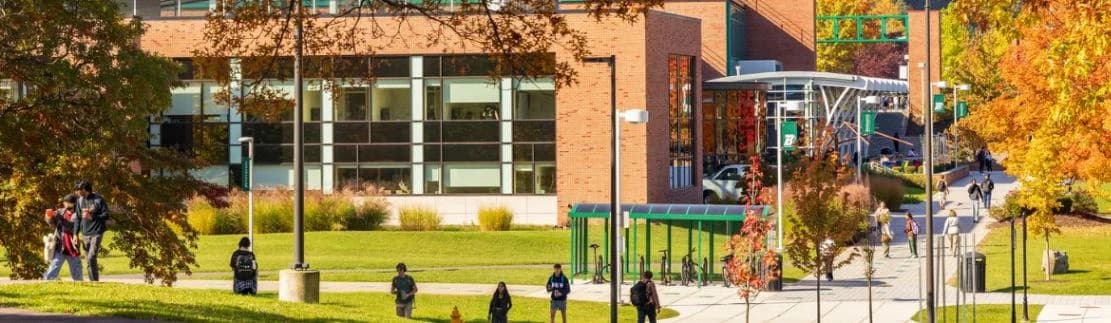
Binghamton University, officially the State University of New York at Binghamton, is a public research university located in Vestal, New York. It is part of the State University of New York (SUNY) system and serves undergraduate and graduate students across a range of disciplines. The university includes Harpur College of Arts and Sciences, the School of Management, the Watson College of Engineering and Applied Science, the Decker College of Nursing and Health Sciences, the College of Community and Public Affairs, and a School of Pharmacy and Pharmaceutical Sciences. Binghamton University is known for its emphasis on research, liberal arts education, and professional programs. It attracts students seeking a comprehensive public university experience in upstate New York with strong academic offerings and Division I athletics.
Admission Requirements
With a 38.61% acceptance rate, Binghamton University is selective. Admitted students usually have strong academic records, competitive test scores, and consistent involvement in extracurricular activities. While admission is competitive, applicants who demonstrate solid academic preparation and clear interests have a realistic chance of admission.
Cost & Financial Aid
History
Binghamton University was founded in 1946 in Endicott, New York, as Triple Cities College to serve local veterans returning from World War II. Initially operating as a junior college affiliated with Syracuse University, it allowed students to complete bachelor’s degrees in Binghamton by 1949. In 1950, the institution separated from Syracuse and joined the newly created State University of New York system as Harpur College. Glenn Bartle, the founding president, guided its early development and expansion of undergraduate programs. During the 1960s, the campus moved to Vestal, New York, and began adding graduate and doctoral programs. The institution adopted the name State University of New York at Binghamton in 1965 and later became commonly known as Binghamton University. Over the following decades, it expanded its research profile, professional schools, and campus facilities, evolving into a comprehensive public research university.
Campus life
Gender
Race & ethnicity
Binghamton University has a 18:1 student-to-faculty ratio, providing a balance between personalized instruction and a broader classroom environment. Students can expect opportunities to engage with professors while also benefiting from diverse perspectives in class discussions.
Applying to Binghamton University with Unive
Applying to Binghamton University involves submitting the SUNY application or Common Application, along with transcripts, test scores if required, and supporting materials. Binghamton University reviews applicants holistically, considering academic performance, course rigor, extracurricular involvement, and personal essays. Prospective students can apply to specific schools within the university, such as Harpur College or the Watson College of Engineering and Applied Science, depending on their academic interests.
Financial Aid at Binghamton University
Binghamton University offers financial aid through federal and state grants, scholarships, loans, and work-study programs. As part of the SUNY system, Binghamton University provides in-state tuition rates for New York residents, which can make it an affordable option compared to many private institutions. Students are encouraged to complete the FAFSA and explore merit-based and need-based aid opportunities.
Build a Stronger Application with Unive
Unive helps applicants present a clear and compelling case to Binghamton University. Using AI-powered tools, students can refine essays, strengthen extracurricular strategy, and improve overall application positioning. Unive also assists with financial aid discovery, helping families identify scholarship opportunities and plan effectively for the cost of attending Binghamton University.
Ready to Apply to Binghamton University?
Join thousands of students using Unive to craft standout applications for their dream schools.
Add to My College List


Is the information about Binghamton University accurate and helpful?