Independence Community College: Cost, Odds & Outcomes
Sep 28, 2026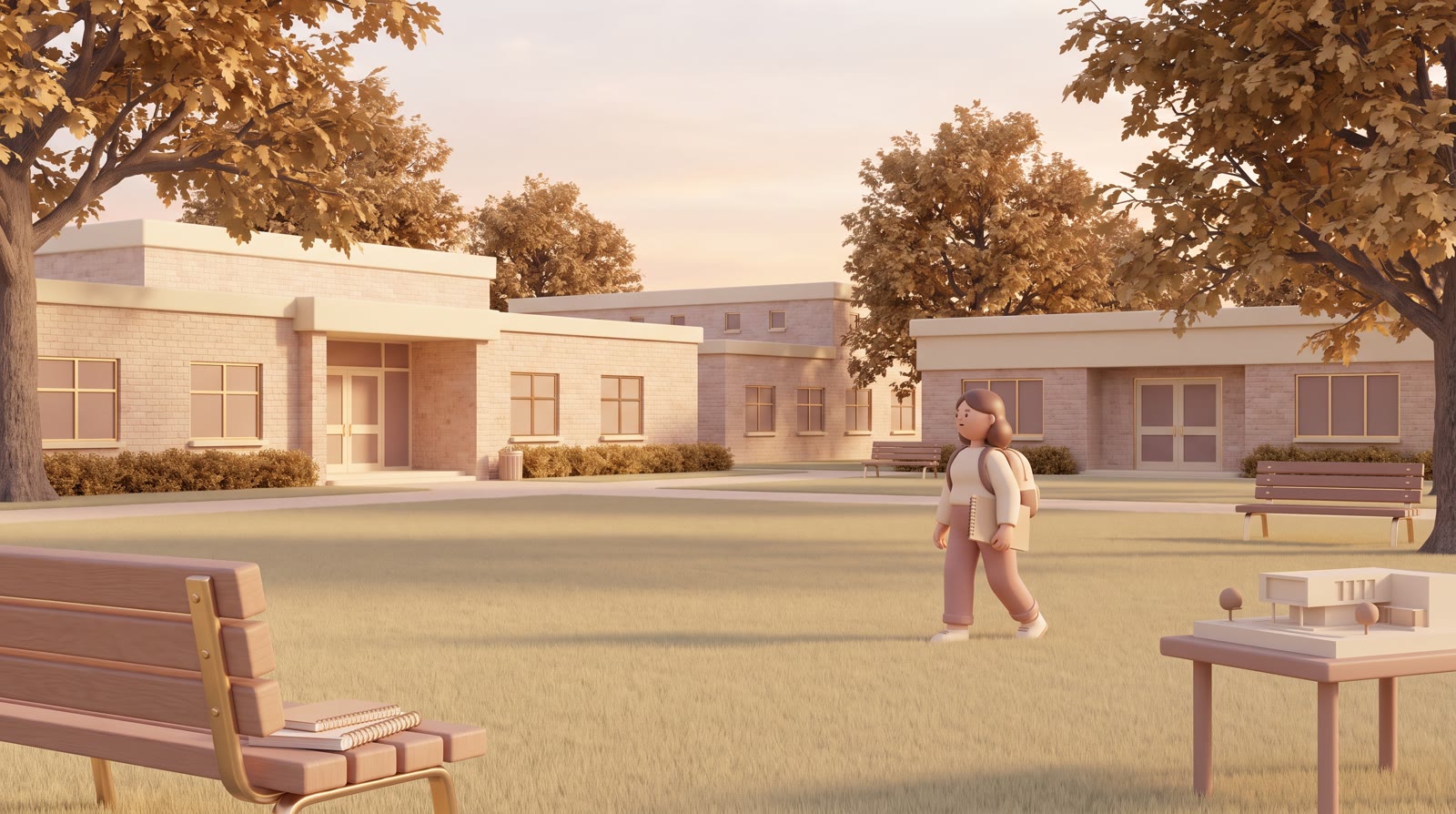
22 min read
The allied health, cosmetology, veterinary technology and culinary programs at Independence Community College do not sit on the main campus. They run out of a renovated former retail building next to a Walmart on the west side of town, paid for partly through a $760,000 capital campaign, according to the college's institutional history. That one detail explains this school better than two seasons of Netflix did. What follows: every tuition tier with a date attached, what "open admission" actually requires, real housing costs, and where the football program stands in 2026.
Key takeaways
- Independence Community College charges five tuition tiers, from $74 per credit in-district to $171 out-of-state (CommunityCollegeReview, 2026).
- Border-state students from Oklahoma, Missouri, Nebraska or Colorado pay about $87 per credit, not the $171 out-of-state rate.
- Enrollment was 764 in 2024 per IPEDS, with an open-door admission policy and no application fee.
- Housing (about $5,786) plus meals (about $2,780) cost roughly twice in-state annual tuition at Indy.
- Students receiving grant or loan aid fell from 70% in 2023 to 59% in 2024, a 15.7% drop (Data USA).
Independence Community College at a glance (and which "Indy" you mean)
Independence Community College is a public two-year college in Independence, Kansas, founded in 1925, enrolling roughly 764 students as of 2024, with an open-door admission policy (effectively a 100% acceptance rate), no application fee, and tuition starting at about $74 per credit hour for in-district students. Its teams are the Pirates. Its website is indycc.edu.
That is the navigational answer. If you were looking for the athletics site, that is indypirates.com. Registrar, enrollment and transcript pages live on the college's official site.
Fast facts
| Item | Detail |
|---|---|
| Type | Public two-year community college |
| Location | Independence, Kansas (Montgomery County seat, population roughly 11,000) |
| Founded | 1925, as grades 13 and 14 of the Independence public school system; legally separated from the district in 1967 |
| Campus | 68 acres on the site of the former Independence Country Club; classes began there in September 1970 |
| Enrollment | 764 total in 2024 per federal IPEDS data (Data USA); 798 per U.S. News; 821 in Fall 2023 per Wikipedia |
| Split | 422 full-time, 342 part-time (about 55% full-time) |
| Student-faculty ratio | 18 to 1, semester calendar (U.S. News) |
| Accreditation | Higher Learning Commission since 1957; most recent reaffirmation 2018, next due 2028 |
| Credentials | Associate degrees plus 20+ vocational certificates across 29 fields |
| Athletics | NJCAA, Kansas Jayhawk Community College Conference, 10 varsity teams, navy blue and Vegas gold |
| ACT score reporting code | 014220 |
Why the enrollment numbers disagree: each directory snapshots a different fall term. Data USA reflects the 2024 IPEDS collection, U.S. News was running an earlier year, and Wikipedia cites Fall 2023. All three describe the same reality, a college under 900 students that has been shrinking slowly.
Not the college you were searching for?
At least three other institutions answer to a similar name. Independence University was a for-profit online school based in Utah that has since shut down. Minnesota Independence College and Community is a Richfield, Minnesota program serving young adults with autism and learning differences. Independence Junior College is in Belize. Only the Kansas one is a public NJCAA member with a Netflix credit.
What changed after the cameras left
Between 2018 and 2019, Indy was the subject of seasons 3 and 4 of Last Chance U. The exposure was enormous and, by the college's own later accounting, expensive. Enrollment today is smaller than it was during the Netflix years, 2024 expenditures ran $18.6 million, and salary spending fell 7.33% in a single year to $6.3 million (Data USA, IPEDS finance data). The Chronicle of Higher Education has reported on what the institution gained and lost by chasing football fame. That tension is the honest frame for everything below.
Admissions: what a 100% acceptance rate does and does not mean
Independence Community College operates an open-door admission policy, and Niche lists a 100% acceptance rate. Open door does not mean no requirements. Degree-seeking and financial-aid-eligible students still need a high school diploma or recognized equivalent, must complete placement assessment before enrolling in English and math, and must meet Kansas residency rules to get the in-state rate.
So the admissions question is not "can I get in." It is "what am I enrolled as, and at what price."
Three enrollment categories that behave differently:
- Degree or certificate seeking. Diploma or equivalent required, placement assessment required, FAFSA available.
- Non-degree seeking. You can often take individual courses without a diploma, but federal aid does not follow you.
- Concurrent or dual enrollment. Kansas high school students take college credit while still in high school, with school district approval and parent or guardian signature.
International applicants add English proficiency documentation, financial certification and I-20 processing, and they pay a separate international per-credit rate.
Which term should you actually be applying for?
As of September 2026, the fall term is already in session. A reader starting now is realistically targeting Spring 2027, which begins in January, or Fall 2027. Enrollment is rolling rather than deadline-driven, which is the single biggest structural difference between a JUCO and a selective four-year. There is no early action, no committee, no waitlist.
What there is instead: a seat-and-schedule race. Popular sections in nursing assistant, EMT, welding and cosmetology fill, and campus housing fills, long before the term starts. Practically, apply 8 to 12 weeks ahead of your start date, file the FAFSA first, then submit transcripts and complete placement.
There is no application fee, which sounds minor and is not. It means applying to Indy costs you nothing but the twenty minutes of typing, so it works well as a genuine financial safety alongside four-year applications. If you are building a balanced list, the logic in our guide to choosing colleges with a reach, target and safety structure applies here: an open-admission school with a per-credit price is the cheapest insurance policy in the entire process.
What Independence Community College costs in 2026-27, every tier and every fee
Independence Community College charges tuition by the credit hour in five residency tiers, from about $74 per credit in-district to $171 per credit for out-of-state students, according to the CommunityCollegeReview profile. A $10 per credit hour Student Union and Security fee applies on top, per the 2026-2027 academic catalog. Most directory listings show only a single in-state and out-of-state pair, which hides the tier that matters most to out-of-state athletes.
| Residency tier | Tuition per credit hour | 15-credit semester (tuition only) | 30 credits (tuition only) |
|---|---|---|---|
| In-district (Montgomery County) | $74 | $1,110 | $2,220 |
| Out-of-district (elsewhere in Kansas) | $80 | $1,200 | $2,400 |
| Border state (Oklahoma, Missouri, Nebraska, Colorado) | $87 | $1,305 | $2,610 |
| Out-of-state | $171 | $2,565 | $5,130 |
| International | $65 | $975 | $1,950 |
Source: CommunityCollegeReview 2026 profile. Semester and annual columns are our arithmetic from the per-credit rates, not published package prices. Two caveats worth naming: the listed international rate sitting below the in-district rate is unusual enough that any international applicant should confirm it in writing with the business office before budgeting, and CommunityCollegeReview also publishes annual figures of roughly $3,376 in-state and $4,656 out-of-state, which do not reconcile cleanly with 30 credits at the per-credit rates. The gap is fees and credit-load assumptions. Run the per-credit math yourself for your actual schedule.
The border-state number is the headline
If you live in Oklahoma, Missouri, Nebraska or Colorado, you pay roughly $87 per credit, not $171. Over a 60-credit associate degree that is about $5,220 versus $10,260 in tuition, a difference of just over $5,000. No aggregator page puts that in front of the recruited athlete or the Tulsa-area adult learner who assumes out-of-state means full price.
Housing, meals and the full published cost
| Cost item | Annual figure | Source |
|---|---|---|
| On-campus housing | about $5,786 | The College Monk, verified August 2026 |
| Meal plan | about $2,780 | The College Monk, verified August 2026 |
| Total published cost of attendance | about $14,556 | CollegeSimply, from IPEDS |
Room and board therefore runs about $8,566 a year, which is roughly twice the annual tuition for an in-state student. At a community college, housing is the cost driver, not instruction. A commuting in-district student taking 30 credits pays roughly $2,220 in tuition plus $600 in Student Union and Security fees. The same student in a dorm with a meal plan is closer to $11,400.
Hidden costs nobody itemizes
Indy runs a free textbook loan program, which is genuinely unusual and worth real money. What it does not cover is consumables: workbooks, online access codes, lab coats, kits. The college estimates those at $100 to $200 per term. Vocational programs carry higher course fees than academic ones, so cosmetology, welding, culinary and veterinary technology students should assume the upper end plus tools and uniforms.
One more: Kansas residency for tuition purposes generally requires six months of domicile in the state before the term begins under Kansas statute. Moving to Independence in August does not make you in-state in September.

Get feedback on your supplemental essays in real-time
Unive.ai helps you improve your writing with instant, personalized feedback on your essays.
Get startedFinancial aid and scholarships: what students actually receive
U.S. News reports that 93% of Independence Community College undergraduates receive grant or scholarship aid, with an average award of $3,456, while the College Board's BigFuture profile lists an average total aid package of $4,733. Both figures originate in federal reporting you can query yourself through NCES College Navigator. Against in-district tuition of roughly $2,220 for 30 credits, an average grant of $3,456 covers tuition outright and starts eating into housing.
Now the number no other page on this search interprets.
> Data USA's IPEDS figures show 59% of Independence Community College undergraduates received grant or loan aid in 2024, down from 70% in 2023, a 15.7% single-year decline in the share of students receiving aid.
That is a real signal, not a rounding artifact. A drop that size usually reflects a shift in who is enrolling (more part-time and non-degree students, who are less aid-eligible), FAFSA completion problems in the cohort, or both. Either way, the planning takeaway is blunt: do not assume aid will show up because it showed up for the class ahead of you. File early, file complete, and verify your enrollment status is aid-eligible.
Your aid stack, in order
1. FAFSA. The 2027-28 form is scheduled to be available by October 1, 2026 under federal law. File at studentaid.gov and list Indy's federal school code.
2. Federal Pell Grant. The largest single lever for most Indy students, and at community college tuition levels it can cover cost of attendance items beyond tuition.
3. Kansas state aid. Kansas administers need- and program-based awards through the Kansas Board of Regents, including career and technical incentive programs that pay for exactly the certificates Indy teaches.
4. Institutional scholarships. Academic, activity (music, theatre, cheer) and athletic awards, generally applied to tuition and fees first.
5. Outside scholarships. The part students skip, and the part with the least competition per dollar at this level.
Athletic scholarships at the NJCAA level are not automatic full rides. Division I NJCAA programs may award tuition, fees, books and, in some sports, room and board, but awards are capped by sport and split across rosters. Get the terms in writing, including what happens if you are injured or the coaching staff changes.
If you are holding more than one offer, work through the mechanics in our guide to comparing financial aid packages line by line, and check our 2026 guide to college grants before you borrow anything.
Where Unive fits, if you want the scholarship side handled
Stacking outside scholarships is dull, deadline-heavy work, which is exactly why most families leave money on the table. Unive is an AI admissions platform built by Yale graduates that matches students to scholarships they actually qualify for, keeps every deadline in one roadmap, and grades essays against real admissions criteria before a human reader ever sees them. Students who use the platform have seen a 3.48x higher acceptance rate. It is a paid subscription with a 7-day money-back guarantee, which puts it in a very different price bracket from the $20,000 private consultant we break down in our analysis of what college consulting actually costs. For a family choosing a community college specifically to control cost, the scholarship matching plus transfer roadmap is the part that pays for itself.
Programs, degrees and what Indy is genuinely good at
Independence Community College awards associate degrees and more than 20 vocational certificates across 29 fields of study. U.S. News identifies General Studies, Liberal Arts and Sciences and Cosmetology as the most-enrolled programs, while Niche's data surfaces Liberal Arts and Humanities, Nursing Assistant and Emergency Care Attendant (EMT). Both are correct; they count differently, with degree completions on one side and program enrollment on the other.
Two campuses, two kinds of education
The main 68-acre campus handles academic transfer coursework, the field house, the theatre and a disc golf course. West Campus, the renovated retail space near Walmart, houses Allied Health, Cosmetology, Veterinary Technology and Culinary. If you are coming for nursing assistant, EMT, vet tech, cosmetology or culinary, most of your program life happens there, not on the main lawn. Ask about transportation between sites before you commit, especially if you are living in the dorms without a car.
Career and technical tracks worth a closer look: welding, agriculture technology, business, and the health credentials that stack (CNA into EMT into further allied health). These are short, priced by the credit, and hire locally. A CNA or EMT certificate finished in two or three terms at $74 to $87 a credit is one of the better cost-per-employability trades available anywhere in southeast Kansas.
The theatre program is not a rounding error
The William Inge Center for the Arts is based at Indy, named for the Pulitzer Prize-winning playwright who grew up in Independence. Its annual festival brings nationally recognized playwrights to a town of 11,000. For a college this size to carry a theatre program with that kind of national recognition is genuinely anomalous, and for a student planning to transfer into a BFA program, it is a real credential and a real network.
If you are mainly planning to transfer academic credit rather than train for a trade, it helps to understand what you are transferring into. Our primer on what a liberal arts education actually involves is a useful companion to an associate of arts plan.
The honest caveat on online courses
Student reviews on Niche are consistent on one point: online sections carry a heavy self-teaching load, and advising quality varies by who you get. That is a common pattern at small colleges with thin staffing, and the finance data supports it. Data USA shows about $1.49 million paid across 25 instructors in 2024, roughly $59,600 each by our arithmetic, at an institution whose total salary spending dropped 7.33% year over year. Plan accordingly: take your hardest gateway courses (anatomy, college algebra, composition) in person if you have the choice, and identify one faculty member or advisor who will actually answer email.

Dorms, campus life and the 11,000-person reality
Independence Community College houses students in three on-campus buildings: a 96-bed living complex, a 200-bed residence hall and a 135-bed suite-style hall, for roughly 430 beds against an enrollment of about 764. Housing runs about $5,786 a year with meal plans around $2,780, per The College Monk's August 2026 figures.
Student reviews describe two main configurations: four-person suites where residents share a bathroom, and four-person apartments with a living room and a half kitchen. Neither is luxurious. Both are cheap by 2026 standards, and the apartment-style units with kitchen access are the ones that let you cut the meal plan bill.
What living here actually looks like:
- The town is small and quiet. Independence is the Montgomery County seat with about 11,000 residents. Coffeyville Community College, the nearest college, sits 12.5 miles away. Tulsa is the closest metro of consequence.
- A car changes everything, particularly with programs split between main campus and West Campus.
- Campus culture skews athletic. With 10 varsity teams at a college of 764, a large share of residential students are athletes, and reviews reflect a football-heavy social center of gravity. Great if you are in it, isolating if you are not.
- The student body is more diverse than the county. Data USA's 2024 figures show 48.4% White and 21.7% Black or African American enrollment, and CommunityCollegeReview puts minority enrollment near 50% against a Kansas average of 41%. Among full-time undergraduates, the most common single group is Black male students at 31.5%, largely a function of athletic recruiting.
That last point is worth sitting with if you are a recruited athlete from Texas, Florida or California. You will find a community on your team. You are also moving to rural southeast Kansas, and the adjustment is real. Ask current players, not coaches, what a Tuesday in February feels like.
See how your profile reads to an admissions officer
Unive's Profile Evaluator shows how your rigor, scores and activities stack up against a specific college, so you know where you stand before you apply.
Get startedPirates athletics and the Last Chance U aftermath
Independence Community College competes in the NJCAA as a member of the Kansas Jayhawk Community College Conference, fielding 10 varsity teams as the Pirates. Seasons 3 and 4 of Netflix's Last Chance U, released in 2018 and 2019, were filmed at Indy. The season 4 team finished 2-8, head coach Jason Brown resigned after making insensitive remarks, and the series went on to win the 2020 Emmy for Outstanding Serialized Sports Documentary.
The timeline, without nostalgia:
| Year | What happened |
|---|---|
| 2016 | 5-4 finish, the program's first winning season in ten years |
| 2017 | Kansas Jayhawk conference title and the program's first bowl win |
| 2018 | Last Chance U season 3 airs |
| 2019 | Season 4 airs; team goes 2-8; head coach resigns |
| 2020 | Series wins the Emmy for Outstanding Serialized Sports Documentary |
| 2026 | "Dream U" era under Kiyoshi Harris; season opener against Coffeyville on September 12 |
Is it still a Division I springboard? Partly, and the current-cycle evidence is better than the 2019 story suggests. Indy Pirates athletics reported Division I signings through June 2026, and on July 29, 2026 the department announced 29 Pirate student-athletes named to NJCAA All-Academic Teams. That second number is the one recruits' parents should care about most, because academic eligibility, not highlight film, is what kills most JUCO transfer plans. Home games are free for Montgomery County residents, which tells you something about how the college now positions the program: community asset first, media property second.
The realistic read for a recruited athlete in 2026: Indy is a legitimate NJCAA program in one of the toughest junior college football conferences in the country, with a genuine record of moving players up. It is not a shortcut. You will need to pass a full-time course load, complete the NJCAA-to-NCAA credit requirements, and have an academic plan that survives a coaching change. Verify conference schedules and eligibility rules directly with the Kansas Jayhawk Community College Conference and the NJCAA, not from a recruiting DM.

Outcomes: graduation rate, transfer math and earnings
Here the sources fight each other, and the fight is instructive. Niche lists a 41% graduation figure. The College Monk states 22%. School Authority publishes 45%. All three are pulling from federal data, so why the spread?
Because "graduation rate" at a two-year college can mean at least three different things:
- IPEDS 150% time completion, meaning students who finished a two-year credential within three years, counted only for the first-time, full-time cohort. This is the conservative number and usually the lowest.
- Completion plus transfer-out, which credits students who left with credits and enrolled elsewhere. Transferring to a four-year school before finishing the associate is a success at a community college, and the strict completion rate treats it as a loss.
- Different cohort years, which at a college with under 900 students means small-sample swings of several points.
Treat the low-20s figure as the floor and the low-40s figures as completion-plus-transfer style measures. Neither is a lie.
Earnings. College Scorecard data cited by EDsmart puts median earnings at $29,674 six years after entry, roughly 32% below the national median. Read that in context: it blends students who finished a certificate and went straight to work locally with students who transferred and are still in school at year six. It is not a verdict on the college so much as a snapshot of southeast Kansas wages plus an unfinished sample.
The 2+2 math, run honestly
This is the calculation that makes Indy make sense, and the one directory pages never do.
| Path | Tuition and fees, first two years (our arithmetic) |
|---|---|
| 60 credits at Indy, in-district | about $4,440 tuition + $600 union and security fees |
| 60 credits at Indy, border state (OK, MO, NE, CO) | about $5,220 tuition + $600 fees |
| 60 credits at Indy, out-of-state | about $10,260 tuition + $600 fees |
| Living on campus, two years | add about $17,132 for housing and meals |
Finishing two years of general education for roughly $5,000 in tuition and fees, then transferring, is the strongest financial argument this college has. Kansas maintains a systemwide transfer framework for approved general education courses across its public institutions through the Kansas Board of Regents, so in-state transfer of a core curriculum is reasonably predictable.
Three rules if transfer is the plan:
1. Pick the destination school before you pick your second-semester classes. Then reverse-engineer the course list from that school's requirements, not from what fits your schedule.
2. Get articulation in writing. Ask for the specific course-to-course equivalency, not a verbal assurance.
3. Protect the GPA from term one. Transfer admission at selective schools is GPA-driven in a way freshman admission is not, as the numbers in our breakdown of transfer acceptance rates at a top public flagship make clear.
Build the transfer roadmap now, not in your fourth semester
The students who lose money at community college are almost never the ones who paid too much tuition. They are the ones who took 74 credits to transfer 48, because nobody mapped the destination requirements in year one. Unive's application roadmap handles that mapping: destination-school requirements, term-by-term course targets, deadlines for transfer applications and scholarships in one workspace, plus AI essay feedback for the transfer statement and interview prep when a competitive program wants a conversation. Subscription-based, 7-day money-back guarantee, and human mentors from top schools available when the AI is not enough. Start at unive.ai, or see how the tools compare in our roundup of the best AI tools for college applications.
How to apply for Spring 2027 or Fall 2027
Applying to Independence Community College is free and rolling. There is no essay requirement, no application fee, and no admissions committee. The sequence below is the one that protects your aid and your class schedule, which is where students actually lose ground.
1. File the FAFSA first. The 2027-28 form should be available by October 1, 2026. Aid processing takes longer than admission.
2. Submit the online application at indycc.edu. Free, and typically completed in under 30 minutes.
3. Send your final high school transcript or equivalency documentation, plus any prior college transcripts for credit evaluation.
4. Complete placement assessment for English and math, or submit qualifying ACT or SAT scores using Indy's ACT code, 014220.
5. Establish residency status. Kansas requires roughly six months of in-state domicile before the term for resident tuition. Border-state students should confirm the border rate applies to their county.
6. Apply for housing early if you need a dorm. Roughly 430 beds serve about 764 students, and suite-style and apartment units go first.
7. Meet an advisor and register, ideally with your transfer destination or certificate requirements already in hand.
8. Athletes: clear eligibility separately. NJCAA eligibility and, if you intend to move to an NCAA school, the credit requirements for that transfer, are their own process. Start it before you enroll.
One strategic note. Because applying here costs nothing and admission is effectively guaranteed, an Indy application makes a rational financial safety even for students aiming at four-year schools. Just keep the two applications separate in tone and content, and avoid the habits we catalogue in college application red flags when you write the four-year essays.
Leadership has turned over repeatedly in recent years (Wikipedia lists Taylor Crawshaw as interim president), so verify current deadlines, per-credit rates and housing costs against the live pages on indycc.edu before you sign anything. Directory sites, including several ranking at the top of this search, are running tuition data from as far back as the 2020-21 year, when U.S. News listed $4,260 in-district, $4,440 in-state and $4,650 out-of-state.
Independence Community College FAQ
What is Independence Community College's acceptance rate?
Effectively 100%. Independence Community College uses an open-door admission policy, and Niche lists a 100% acceptance rate. Admission is not the same as eligibility: degree-seeking and financial-aid students still need a high school diploma or recognized equivalent and must complete placement assessment in English and math before registering for those courses.
How much is tuition at Independence Community College?
Tuition is charged per credit hour in five tiers: roughly $74 in-district, $80 out-of-district within Kansas, $87 for border states, $171 out-of-state and $65 international, per CommunityCollegeReview's 2026 profile. A $10 per credit hour Student Union and Security fee applies on top. Thirty credits at the in-district rate works out to about $2,220 in tuition plus $300 in fees.
Is Independence Community College still on Last Chance U?
No. Indy appeared in seasons 3 and 4, released in 2018 and 2019, and the series later moved on to other schools before winning a 2020 Emmy for its Independence-based season. The football program continues in the NJCAA and the Kansas Jayhawk Community College Conference, now branded "Dream U," and reported Division I signings through June 2026.
What do dorms cost at Independence Community College?
On-campus housing runs about $5,786 a year with meal plans around $2,780, per The College Monk figures verified in August 2026. Housing is three buildings totaling roughly 430 beds: a 96-bed complex, a 200-bed residence hall and a 135-bed suite hall. Students describe four-person suites with a shared bathroom and four-person apartments with a living room and half kitchen.
Can I transfer from Independence Community College to a four-year school?
Yes, and it is the strongest financial case for enrolling. Kansas maintains a systemwide transfer framework for approved general education courses across public institutions through the Kansas Board of Regents. Finishing 60 credits in-district costs roughly $5,000 in tuition and fees by our arithmetic. Choose your destination school in term one and build the course plan backward from its requirements.
Is Independence Community College accredited?
Yes. Independence Community College has been accredited by the Higher Learning Commission since 1957, with its most recent full reaffirmation in 2018 and the next scheduled for 2028. HLC accreditation is what makes federal financial aid available and makes credits transferable to other accredited institutions, including Kansas public universities.
How many students attend Independence Community College?
About 764 students as of 2024 according to federal IPEDS data reported by Data USA, split 422 full-time and 342 part-time. U.S. News lists 798 and Wikipedia cites 821 for Fall 2023, because each source snapshots a different term. The trend across those years is a slow decline, and the student-faculty ratio is 18 to 1.
What programs is Independence Community College known for?
Associate degrees plus more than 20 vocational certificates across 29 fields. U.S. News lists General Studies, Liberal Arts and Sciences and Cosmetology as most enrolled; Niche highlights Nursing Assistant and EMT. Allied Health, Cosmetology, Veterinary Technology and Culinary are taught at West Campus. The William Inge Center for the Arts gives the college a nationally recognized theatre presence.
Read next


Jonas

Jonas is the CEO at Unive. Unive students were accepted at 3.48x the average rate and won $35.8M in extra scholarships in 2025. 93% of Unive students get into one of their top 5 college choices.
See more