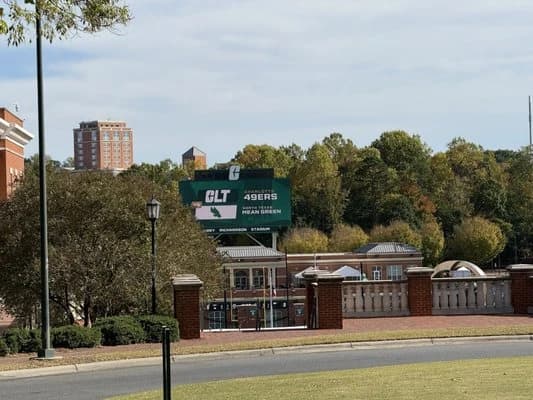

University of North Carolina at Charlotte
Overview
The University of North Carolina at Charlotte is a public research university located in Charlotte, North Carolina. Established in 1946, it is part of the University of North Carolina system and serves as a major urban institution in the state’s largest city. The university offers a wide range of undergraduate, master’s, and doctoral programs across fields such as engineering, business, computing, education, health, and the liberal arts. In 2025, it earned Carnegie R1 classification, recognizing a high level of research activity. With strong ties to the Charlotte region’s finance, energy, technology, and manufacturing sectors, it attracts students interested in applied research, professional preparation, and engagement with a growing metropolitan area.
Admission Requirements
With a 79.6% acceptance rate, University of North Carolina at Charlotte is moderately selective. Applicants are expected to show good academic performance and readiness for college-level coursework. Students with consistent grades, extracurricular involvement, and a well-prepared application are typically competitive for admission.
Cost & Financial Aid
History
The University of North Carolina at Charlotte was founded in 1946 as the Charlotte Center of the University of North Carolina to serve returning World War II veterans. In 1949, it became Charlotte College, a two-year institution led by Bonnie Ethel Cone, who played a central role in its development. As enrollment grew, the college expanded to a four-year institution in the early 1960s. In 1965, the North Carolina General Assembly designated it The University of North Carolina at Charlotte, making it the fourth campus of the consolidated UNC system. Under its first chancellor, Dean W. Colvard, the university expanded academic programs and campus facilities. Over subsequent decades, the University of North Carolina at Charlotte developed graduate and doctoral offerings, strengthened research initiatives, and in 2025 achieved Carnegie R1 status, marking its evolution into a major public research university in Charlotte, North Carolina.
Campus life
Gender
Race & ethnicity
University of North Carolina at Charlotte has a 21:1 student-to-faculty ratio, meaning classes may be larger, especially in introductory courses. While lecture-based learning may be more common, students still have opportunities to connect with professors through office hours, discussion sections, and academic advising.
Applying to University of North Carolina at Charlotte with Unive
Applying to University of North Carolina at Charlotte involves submitting an online application, academic transcripts, and required supporting materials depending on program level. As a public research university in Charlotte, North Carolina, the institution reviews applicants based on academic preparation, coursework rigor, and alignment with intended majors. Prospective students can apply for fall or spring entry, and some competitive programs may have additional requirements.
Financial Aid at University of North Carolina at Charlotte
University of North Carolina at Charlotte offers financial aid through federal and state grants, scholarships, work-study programs, and student loans. North Carolina residents may qualify for state-supported aid, while merit-based scholarships are available for high-achieving students. Completing the FAFSA is an essential step for students seeking need-based assistance at University of North Carolina at Charlotte.
Build a Stronger Application with Unive
Unive helps students prepare competitive applications to University of North Carolina at Charlotte through AI-powered guidance on essays, extracurricular strategy, and overall application positioning. Students can refine personal statements, identify meaningful activities, and discover relevant financial aid opportunities, building a clear and well-structured application.
Ready to Apply to University of North Carolina at Charlotte?
Join thousands of students using Unive to craft standout applications for their dream schools.
Add to My College List


Is the information about University of North Carolina at Charlotte accurate and helpful?