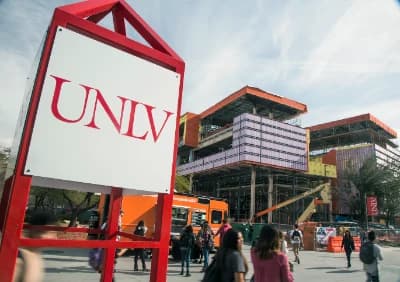

University of Nevada-Las Vegas
Overview
University of Nevada-Las Vegas is a public land-grant research university located in Paradise, Nevada, adjacent to the city of Las Vegas. Established as a branch of the University of Nevada in 1957, it later became an independent institution within the Nevada System of Higher Education. The university offers a wide range of undergraduate, graduate, and professional programs, including law, dental medicine, engineering, business, hospitality, health sciences, and the liberal arts. UNLV is classified as a doctoral university with very high research activity and serves a diverse student population drawn from Nevada and beyond. Its urban setting and strong ties to the Las Vegas metropolitan area shape its academic and community engagement priorities.
Admission Requirements
With a 96.17% acceptance rate, University of Nevada-Las Vegas is moderately selective. Applicants are expected to show good academic performance and readiness for college-level coursework. Students with consistent grades, extracurricular involvement, and a well-prepared application are typically competitive for admission.
Cost & Financial Aid
History
University of Nevada-Las Vegas was founded in 1957 as the Southern Division of the University of Nevada to serve the growing population of Southern Nevada. The first classes were held in Maude Frazier Hall on a 60-acre campus in what is now Paradise, Nevada. In 1965, the institution became Nevada Southern University, and in 1969 it adopted the name University of Nevada-Las Vegas after gaining greater autonomy within the state system. UNLV expanded rapidly during the 1970s and 1980s, adding new colleges, graduate programs, and research centers as Las Vegas experienced significant population growth. The university established professional schools in areas such as law and dental medicine and developed nationally visible athletic programs. In the twenty-first century, University of Nevada-Las Vegas achieved classification as a doctoral university with very high research activity, reflecting its continued growth in research, enrollment, and academic offerings.
Campus life
Gender
Race & ethnicity
University of Nevada-Las Vegas has a 19:1 student-to-faculty ratio, meaning classes may be larger, especially in introductory courses. While lecture-based learning may be more common, students still have opportunities to connect with professors through office hours, discussion sections, and academic advising.
Applying to University of Nevada-Las Vegas with Unive
Applying to University of Nevada-Las Vegas involves submitting an online application, academic transcripts, and any program-specific materials required for selective majors. As a public research university in Nevada, University of Nevada-Las Vegas considers academic performance, coursework rigor, and residency status in its admissions review. Prospective students should review deadlines carefully and explore options within its undergraduate, graduate, and professional schools.
Financial Aid at University of Nevada-Las Vegas
University of Nevada-Las Vegas offers financial aid through federal and state grants, scholarships, work-study programs, and student loans. Nevada residents may qualify for state-based aid programs, while merit scholarships are available for qualifying applicants. Completing the FAFSA and monitoring University of Nevada-Las Vegas financial aid communications are important steps in building an affordable college plan.
Build a Stronger Application with Unive
Unive helps students prepare competitive applications to University of Nevada-Las Vegas by providing AI-powered guidance on personal statements, extracurricular planning, and overall application positioning. Students can refine essays, identify meaningful activities, and discover relevant scholarship and financial aid opportunities, making the process of applying to University of Nevada-Las Vegas more strategic and organized.
Ready to Apply to University of Nevada-Las Vegas?
Join thousands of students using Unive to craft standout applications for their dream schools.
Add to My College List


Is the information about University of Nevada-Las Vegas accurate and helpful?