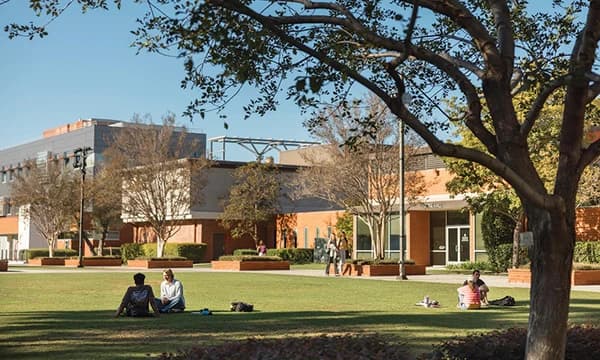

Biola University
Overview
Biola University is a private, nondenominational evangelical Christian university located in La Mirada, California. Founded in 1908 as the Bible Institute of Los Angeles, it developed from a Bible training institute into a comprehensive university offering undergraduate, master’s, and doctoral degrees. Biola integrates Christian faith with academic study across disciplines including business, psychology, education, theology, science, and cinema and media arts. The university operates several schools, including the Talbot School of Theology and the Rosemead School of Psychology. Biola attracts students seeking a Christ-centered education that combines professional preparation with required biblical studies and an evangelical theological framework.
Admission Requirements
With a 74.35% acceptance rate, Biola University is moderately selective. Applicants are expected to show good academic performance and readiness for college-level coursework. Students with consistent grades, extracurricular involvement, and a well-prepared application are typically competitive for admission.
Cost & Financial Aid
History
Biola University was founded in 1908 in Los Angeles, California, as the Bible Institute of Los Angeles by Lyman Stewart and Thomas C. Horton to provide Bible and missionary training. In its early decades, the institute focused on two-year diploma programs centered on Scripture and evangelism. William P. White became the institution’s first president in 1929, helping guide it through the Great Depression. The school broadened its curriculum over time and was renamed Biola College in 1949. In 1959, Biola relocated to La Mirada, California, where it expanded its campus and academic offerings. The institution achieved university status in 1981, becoming Biola University. Subsequent decades saw the growth of graduate and professional schools, including Talbot School of Theology and the Rosemead School of Psychology, shaping Biola University into a comprehensive evangelical university with undergraduate and doctoral programs.
Campus life
Gender
Race & ethnicity
Biola University has a 15:1 student-to-faculty ratio, providing a balance between personalized instruction and a broader classroom environment. Students can expect opportunities to engage with professors while also benefiting from diverse perspectives in class discussions.
Applying to Biola University with Unive
Applying to Biola University involves submitting an undergraduate or graduate application, academic transcripts, and materials that reflect both academic preparation and alignment with the university’s Christian mission. Biola University reviews applicants holistically, considering coursework rigor, personal statements, recommendations, and spiritual commitment alongside test scores where applicable.
Financial Aid at Biola University
Biola University offers a range of financial aid options, including merit-based scholarships, need-based grants, federal aid programs, and institutional awards. Students applying to Biola University can complete the FAFSA and explore university-specific scholarships to help manage tuition and living costs in Southern California.
Build a Stronger Application with Unive
Unive helps students prepare competitive applications to Biola University through AI-powered guidance on essays, extracurricular strategy, and overall application positioning. Students can refine personal statements, clarify academic goals, and discover financial aid opportunities, building a thoughtful and well-structured application tailored to Biola University’s admissions expectations.
Ready to Apply to Biola University?
Join thousands of students using Unive to craft standout applications for their dream schools.
Add to My College List


Is the information about Biola University accurate and helpful?