
University of Minnesota-Twin Cities
Overview
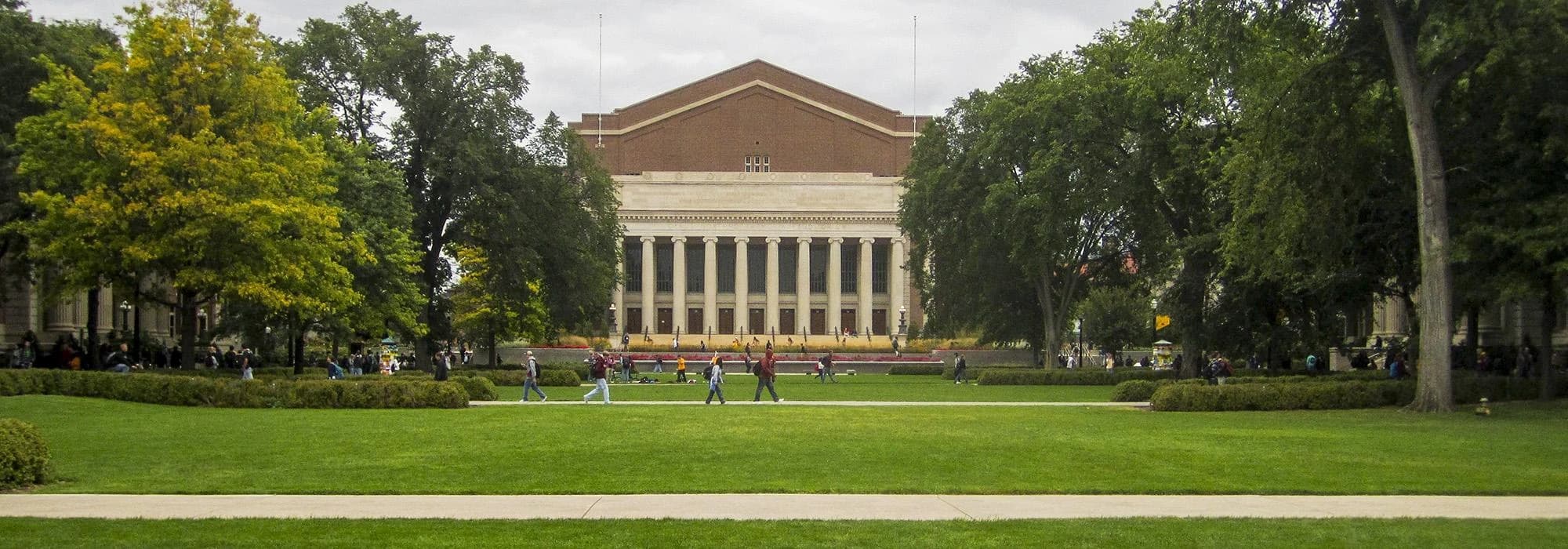
The University of Minnesota-Twin Cities is a public land-grant research university located in Minneapolis and St. Paul, Minnesota. It is the flagship campus of the University of Minnesota System and one of the largest universities in the United States by enrollment. Organized into multiple colleges and schools, it offers a wide range of undergraduate, graduate, and professional programs, including law, medicine, engineering, business, and agriculture. The campus spans both sides of the Mississippi River and is integrated into the urban environment of the Twin Cities. Students are often drawn to its broad academic offerings, strong research activity, and opportunities for engagement in a major metropolitan area.
Admission Requirements
With a 79.75% acceptance rate, University of Minnesota-Twin Cities is moderately selective. Applicants are expected to show good academic performance and readiness for college-level coursework. Students with consistent grades, extracurricular involvement, and a well-prepared application are typically competitive for admission.
Cost & Financial Aid
History
The University of Minnesota-Twin Cities was founded in 1851, seven years before Minnesota achieved statehood, when the territorial legislature established it as a preparatory school. Early operations were inconsistent, and the institution temporarily closed in 1858 before reopening in 1867 after receiving federal land-grant support under the Morrill Act. In 1869, William Watts Folwell became the first president and helped organize the institution as a comprehensive university. During the late nineteenth and early twentieth centuries, the University of Minnesota-Twin Cities expanded its academic programs, adding professional schools such as medicine and law and strengthening its research mission. The campus grew across both Minneapolis and St. Paul, developing facilities along the Mississippi River. Over time, the University of Minnesota-Twin Cities evolved into the flagship campus of a multi-campus system, maintaining its role as a major public research university in Minnesota.
Campus life
Gender
Race & ethnicity
University of Minnesota-Twin Cities has a 17:1 student-to-faculty ratio, providing a balance between personalized instruction and a broader classroom environment. Students can expect opportunities to engage with professors while also benefiting from diverse perspectives in class discussions.
Applying to University of Minnesota-Twin Cities with Unive
Applying to University of Minnesota-Twin Cities involves submitting an online application, academic transcripts, and supporting materials that reflect preparation for rigorous study. As a large public research university in Minneapolis and St. Paul, University of Minnesota-Twin Cities reviews applicants holistically, considering coursework, academic performance, and personal context.
Financial Aid at University of Minnesota-Twin Cities
University of Minnesota-Twin Cities offers financial aid through federal and state grants, scholarships, work-study, and loans. Both Minnesota residents and out-of-state students can explore merit-based and need-based options. Completing the FAFSA is an important step in accessing financial support at University of Minnesota-Twin Cities.
Build a Stronger Application with Unive
Unive helps students prepare competitive applications to University of Minnesota-Twin Cities with AI-powered guidance on essays, extracurricular strategy, and overall application positioning. Students can also discover relevant scholarships and financial aid opportunities, making the process of applying to University of Minnesota-Twin Cities more organized and strategic.
Ready to Apply to University of Minnesota-Twin Cities?
Join thousands of students using Unive to craft standout applications for their dream schools.
Add to My College List


Is the information about University of Minnesota-Twin Cities accurate and helpful?