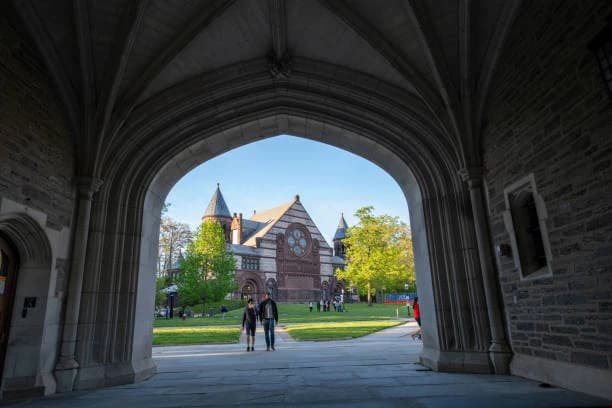

Princeton University
Overview
Princeton University is a private research university located in Princeton, New Jersey. Founded in 1746, it is one of the oldest institutions of higher education in the United States. Originally established as the College of New Jersey, Princeton University offers undergraduate and graduate programs across the humanities, social sciences, natural sciences, and engineering. The university is known for its emphasis on undergraduate teaching, senior thesis requirement, and residential college system. It attracts students interested in rigorous academic study, public service, research, and leadership across a wide range of disciplines.
Admission Requirements
With a 4.62% acceptance rate, Princeton University is very selective. Successful applicants typically have top grades, strong standardized test scores, and outstanding extracurricular achievements. Admission is highly competitive, and the university looks for students who demonstrate academic excellence, leadership, and meaningful impact outside the classroom.
Cost & Financial Aid
History
Princeton University was founded in 1746 as the College of New Jersey, making it one of the oldest colleges in the United States. Established by Presbyterian leaders during the Great Awakening, the institution aimed to train ministers while providing a broad liberal arts education. Its first president, Jonathan Dickinson, led the college beginning in 1747. The college moved to Princeton, New Jersey, in 1756, where Nassau Hall became its central building. In 1896, the College of New Jersey was officially renamed Princeton University to reflect its expanded academic scope. During the late nineteenth and early twentieth centuries, Princeton University developed graduate programs and strengthened research. The university admitted women as undergraduates in 1969, marking a significant structural change. In the decades since, Princeton University has expanded its academic programs, research initiatives, and campus facilities while maintaining its historic campus in Princeton.
Campus life
Gender
Race & ethnicity
Princeton University has a 5:1 student-to-faculty ratio, which means small class sizes and close interaction with professors. Students often benefit from more personalized attention, accessible faculty mentorship, and greater opportunities for discussion and research collaboration.
Applying to Princeton University with Unive
Applying to Princeton University involves a highly selective admissions process that considers academic achievement, intellectual curiosity, extracurricular involvement, and personal character. Princeton University reviews applications holistically, including transcripts, recommendations, essays, and evidence of sustained interests. Prospective students should prepare a thoughtful application that reflects both academic strength and meaningful engagement beyond the classroom.
Financial Aid at Princeton University
Princeton University offers need-based financial aid and has a longstanding policy of meeting 100% of demonstrated financial need for admitted students. The university emphasizes grant-based aid rather than loans, helping reduce long-term student debt. Families applying to Princeton University submit detailed financial information to determine eligibility for institutional support.
Build a Stronger Application with Unive
Unive supports students applying to Princeton University by providing AI-powered guidance on essays, extracurricular strategy, and overall application positioning. Students can refine personal statements, clarify their academic narrative, and identify opportunities that strengthen their profile. Unive also assists with financial aid discovery, helping applicants better understand funding options while preparing a competitive application to Princeton University.
Ready to Apply to Princeton University?
Join thousands of students using Unive to craft standout applications for their dream schools.
Add to My College List


Is the information about Princeton University accurate and helpful?