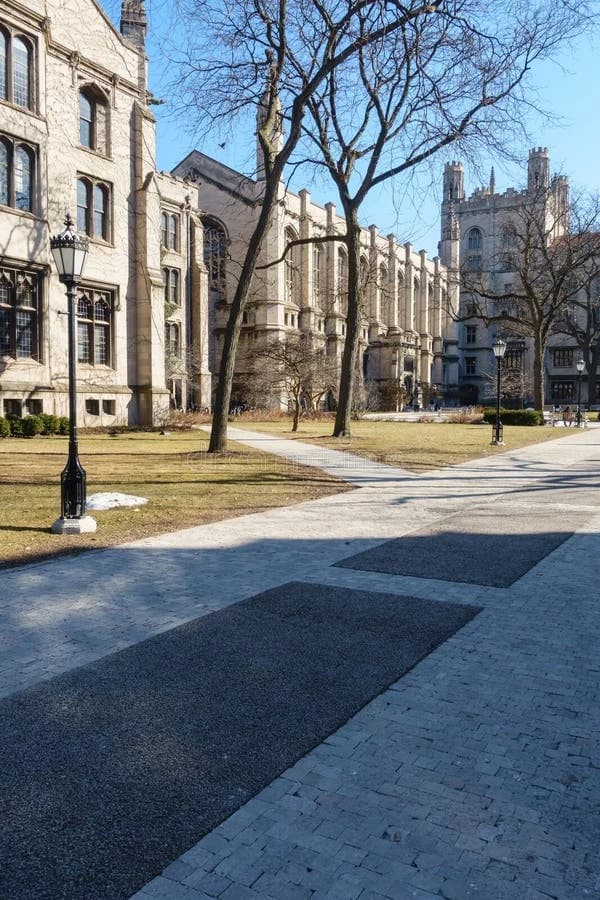

University of Chicago
Overview
The University of Chicago is a private research university located in the Hyde Park neighborhood of Chicago, Illinois. Founded in 1890, it was established with support from the American Baptist Education Society and a major donation from John D. Rockefeller. The university offers undergraduate, graduate, and professional programs across disciplines including the humanities, social sciences, physical and biological sciences, business, law, and medicine. It is associated with the Chicago school of economics and has played a significant role in research initiatives such as the first controlled nuclear reaction. Students are often drawn to the university’s rigorous academic culture, emphasis on critical inquiry, and research-focused environment.
Admission Requirements
With a 4.48% acceptance rate, University of Chicago is very selective. Successful applicants typically have top grades, strong standardized test scores, and outstanding extracurricular achievements. Admission is highly competitive, and the university looks for students who demonstrate academic excellence, leadership, and meaningful impact outside the classroom.
Cost & Financial Aid
History
The University of Chicago was founded in 1890 through the efforts of the American Baptist Education Society and a major donation from John D. Rockefeller. Incorporated in 1890, the institution began classes in 1892 under its first president, William Rainey Harper, who emphasized research and graduate education alongside undergraduate instruction. Located in Chicago’s Hyde Park neighborhood, the University of Chicago quickly developed a reputation for innovative academic structures, including the quarter system and comprehensive examinations. In the early twentieth century, it became associated with influential intellectual movements such as the Chicago school of economics. In 1942, researchers at the University of Chicago achieved the first controlled nuclear chain reaction as part of the Manhattan Project. Over the decades, the university expanded its professional schools, research institutes, and global programs, shaping its evolution into a major center for higher education and research in the United States.
Campus life
Gender
Race & ethnicity
University of Chicago has a 5:1 student-to-faculty ratio, which means small class sizes and close interaction with professors. Students often benefit from more personalized attention, accessible faculty mentorship, and greater opportunities for discussion and research collaboration.
Applying to University of Chicago with Unive
Applying to the University of Chicago involves a holistic admissions process that considers academic achievement, intellectual curiosity, essays, recommendations, and extracurricular engagement. The University of Chicago is known for its distinctive essay prompts and emphasis on critical thinking. Applicants may apply through Early Decision, Early Action, or Regular Decision, and should demonstrate strong preparation across core academic subjects.
Financial Aid at University of Chicago
The University of Chicago offers need-based financial aid and is committed to meeting 100 percent of demonstrated financial need for admitted students. Financial aid packages may include grants, scholarships, work-study opportunities, and limited loans. The University of Chicago also provides specific initiatives to support first-generation and lower-income students, helping make attendance more accessible.
Build a Stronger Application with Unive
Unive helps students prepare competitive applications to the University of Chicago through AI-powered guidance on essays, extracurricular strategy, and overall application positioning. Students can refine their personal statements, align activities with academic interests, and identify relevant financial aid opportunities. With structured feedback and planning tools, Unive supports applicants in presenting a clear and compelling profile to the University of Chicago.
Ready to Apply to University of Chicago?
Join thousands of students using Unive to craft standout applications for their dream schools.
Add to My College List


Is the information about University of Chicago accurate and helpful?