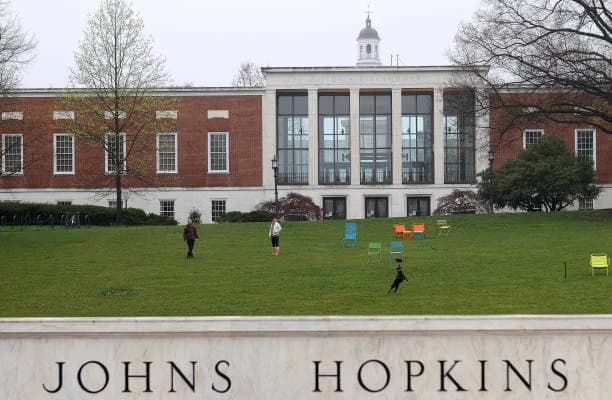

Johns Hopkins University
Overview
Johns Hopkins University is a private research university located in Baltimore, Maryland. Founded in 1876, it was the first institution in the United States to adopt the modern research university model that integrates teaching and research. The university comprises multiple schools, including arts and sciences, engineering, medicine, public health, international studies, and business. It is particularly known for its emphasis on research, medicine, and public health, as well as its longstanding leadership in federal research funding. Students drawn to Johns Hopkins University often seek rigorous academic programs, opportunities for undergraduate and graduate research, and access to major medical and policy institutions in Baltimore and Washington, D.C.
Admission Requirements
With a 6.44% acceptance rate, Johns Hopkins University is very selective. Successful applicants typically have top grades, strong standardized test scores, and outstanding extracurricular achievements. Admission is highly competitive, and the university looks for students who demonstrate academic excellence, leadership, and meaningful impact outside the classroom.
Cost & Financial Aid
History
Johns Hopkins University was founded in 1876 in Baltimore, Maryland, through a bequest from merchant and philanthropist Johns Hopkins. Incorporated in 1867 and opened in 1876, the university became the first institution in the United States to adopt the European model that combined teaching and original research. Its first president, Daniel Coit Gilman, emphasized graduate education and the advancement of knowledge. In 1893, the School of Medicine opened, strengthening ties with Johns Hopkins Hospital and shaping medical education nationally. The Homewood campus became the university’s main site in the early 20th century. Over time, Johns Hopkins University expanded to include schools of public health, advanced international studies, business, and engineering. In the late 20th and early 21st centuries, the university grew its research enterprise and expanded its presence in Washington, D.C., reinforcing its role as a major research institution.
Campus life
Gender
Race & ethnicity
Johns Hopkins University has a 6:1 student-to-faculty ratio, which means small class sizes and close interaction with professors. Students often benefit from more personalized attention, accessible faculty mentorship, and greater opportunities for discussion and research collaboration.
Applying to Johns Hopkins University with Unive
Applying to Johns Hopkins University involves a highly selective admissions process that evaluates academic achievement, standardized testing where applicable, essays, recommendations, and extracurricular involvement. Prospective students can apply through Early Decision or Regular Decision, and the university looks for applicants who demonstrate strong preparation and intellectual engagement. Johns Hopkins University places particular emphasis on evidence of curiosity, initiative, and commitment in and beyond the classroom.
Financial Aid at Johns Hopkins University
Johns Hopkins University offers need-based financial aid to domestic and international students, aiming to meet demonstrated financial need. Aid packages may include grants, scholarships, work-study opportunities, and limited loans. Families are encouraged to submit required financial documents on time so Johns Hopkins University can provide a comprehensive assessment of eligibility and affordability.
Build a Stronger Application with Unive
Unive helps students prepare competitive applications to Johns Hopkins University through AI-powered guidance on essays, extracurricular strategy, and overall positioning. Students receive structured feedback to refine personal statements, clarify academic interests, and align activities with long-term goals. Unive also supports financial aid discovery, helping applicants identify funding opportunities while building a cohesive and compelling application profile.
Ready to Apply to Johns Hopkins University?
Join thousands of students using Unive to craft standout applications for their dream schools.
Add to My College List


Is the information about Johns Hopkins University accurate and helpful?