
Virginia Commonwealth University
Overview
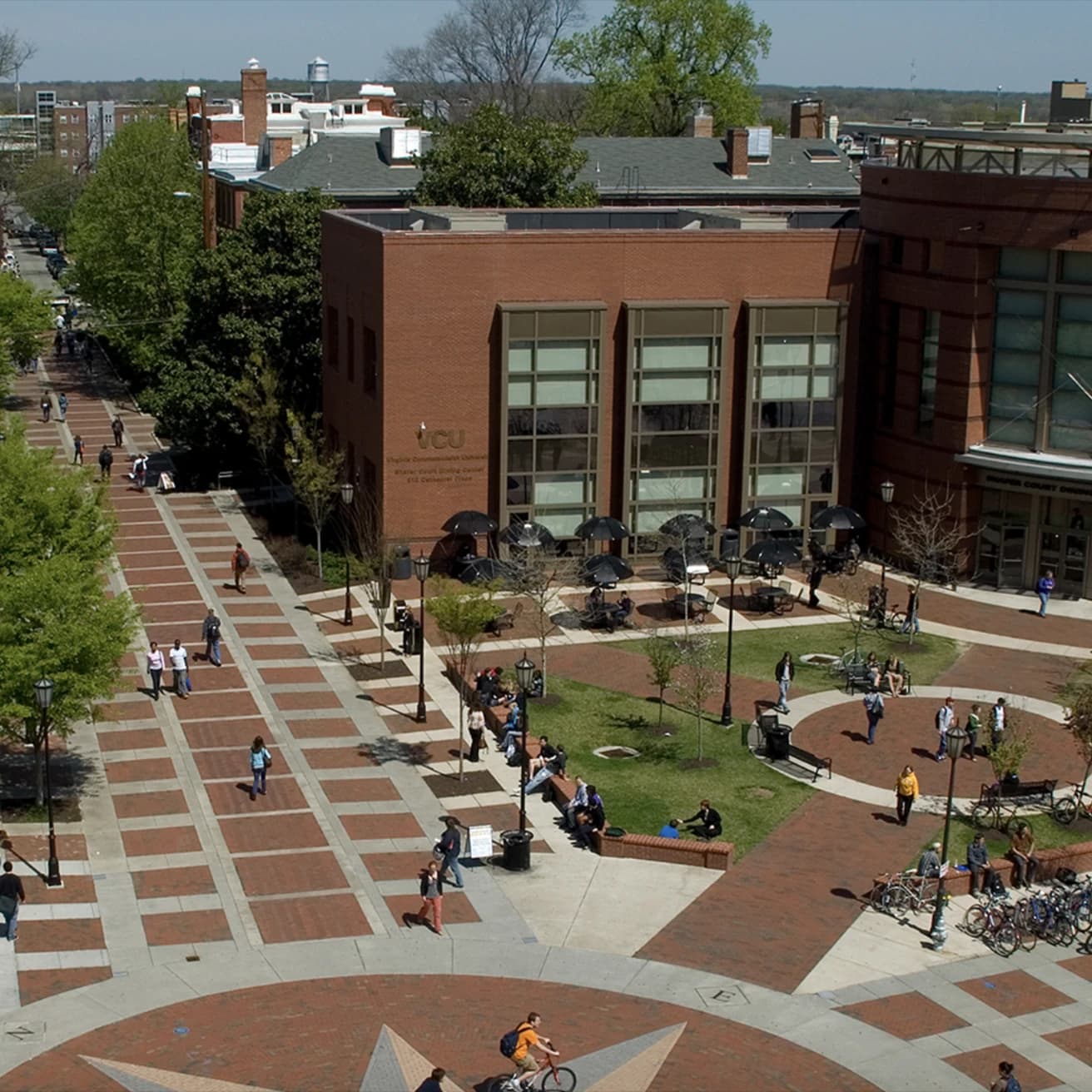
Virginia Commonwealth University is a public research university located in Richmond, Virginia. Established in 1968 through the merger of the Medical College of Virginia and the Richmond Professional Institute, it operates multiple campuses in downtown Richmond, including the Monroe Park and MCV campuses. The university offers a wide range of undergraduate, graduate, and professional programs, with particular strengths in the arts, health sciences, business, engineering, and public affairs. Its urban setting supports partnerships with government, healthcare systems, and cultural institutions. Virginia Commonwealth University attracts students seeking a large, diverse public university experience with access to research opportunities and community engagement in a capital city environment.
Admission Requirements
With a 92.62% acceptance rate, Virginia Commonwealth University is moderately selective. Applicants are expected to show good academic performance and readiness for college-level coursework. Students with consistent grades, extracurricular involvement, and a well-prepared application are typically competitive for admission.
Cost & Financial Aid
History
Virginia Commonwealth University was founded in 1968 in Richmond, Virginia, through the merger of the Medical College of Virginia, established in 1838, and the Richmond Professional Institute, founded in 1917. The consolidation created a comprehensive public university combining health sciences, professional studies, and liberal arts programs. In its early years, Virginia Commonwealth University expanded academic offerings and research activity while strengthening its role in urban education. During the late twentieth century, the university developed nationally recognized programs in the arts, business, engineering, and health sciences, supported by the growth of the VCU Health System. Entering the twenty-first century, Virginia Commonwealth University increased research funding, expanded campus facilities, and broadened community partnerships in downtown Richmond. Today, it is a major public research institution serving students across a wide range of disciplines while maintaining strong ties to its medical and professional roots.
Campus life
Gender
Race & ethnicity
Virginia Commonwealth University has a 17:1 student-to-faculty ratio, providing a balance between personalized instruction and a broader classroom environment. Students can expect opportunities to engage with professors while also benefiting from diverse perspectives in class discussions.
Applying to Virginia Commonwealth University with Unive
Applying to Virginia Commonwealth University involves submitting an online application, academic transcripts, and any program-specific materials required for selective majors. As a large public research institution in Richmond, Virginia Commonwealth University reviews applicants based on academic preparation, course rigor, and overall fit with the chosen field of study. Some programs, particularly in the arts and health sciences, may require portfolios or additional documentation.
Financial Aid at Virginia Commonwealth University
Virginia Commonwealth University offers a range of financial aid options, including federal and state grants, scholarships, work-study programs, and student loans. In-state tuition rates provide additional value for Virginia residents, while merit-based scholarships support high-achieving applicants. Students applying to Virginia Commonwealth University should complete the FAFSA to be considered for need-based assistance and institutional awards.
Build a Stronger Application with Unive
Unive helps students strengthen their Virginia Commonwealth University applications through AI-powered guidance on essays, extracurricular planning, and academic positioning. The platform provides personalized feedback to clarify goals, highlight achievements, and align applications with specific programs. Unive also supports financial aid discovery, helping applicants identify scholarship opportunities that match their academic interests and background.
Ready to Apply to Virginia Commonwealth University?
Join thousands of students using Unive to craft standout applications for their dream schools.
Add to My College List


Is the information about Virginia Commonwealth University accurate and helpful?