
University of North Carolina at Chapel Hill
Overview
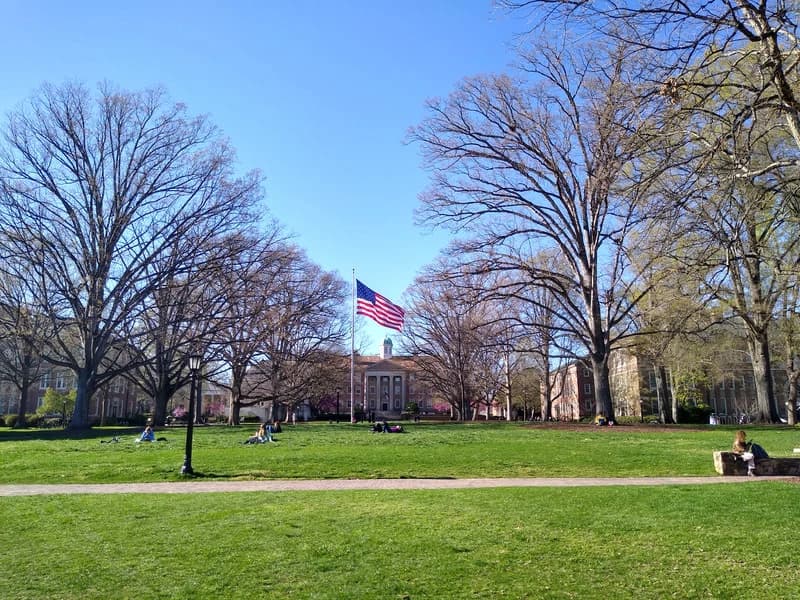
The University of North Carolina at Chapel Hill is a public research university located in Chapel Hill, North Carolina. Chartered in 1789 and opening to students in 1795, it is the oldest public university in the United States to award degrees under its original charter. As the flagship campus of the University of North Carolina System, it offers a broad range of undergraduate, graduate, and professional programs across arts and sciences, business, law, medicine, and public health. The university is known for its research activity and its role in state and regional development. It attracts students seeking a large public university environment with strong academic offerings and an active campus community.
Admission Requirements
With a 15.34% acceptance rate, University of North Carolina at Chapel Hill is selective. Admitted students usually have strong academic records, competitive test scores, and consistent involvement in extracurricular activities. While admission is competitive, applicants who demonstrate solid academic preparation and clear interests have a realistic chance of admission.
Cost & Financial Aid
History
The University of North Carolina at Chapel Hill was chartered in 1789 by the North Carolina General Assembly, making it one of the earliest public universities in the United States. It opened to students in 1795 in Chapel Hill, North Carolina, and became the first public university to award degrees under its original charter. Joseph Caldwell was appointed as its first president in 1804, helping to stabilize and expand the early institution. During the 19th century, the university experienced growth as well as disruption during the Civil War and Reconstruction, temporarily closing in 1870 before reopening in 1875. In 1931, it became part of the consolidated University of North Carolina system. Over the 20th century, the University of North Carolina at Chapel Hill expanded its research enterprise, professional schools, and campus infrastructure, developing into a major public research university serving the state and beyond.
Campus life
Gender
Race & ethnicity
University of North Carolina at Chapel Hill has a 15:1 student-to-faculty ratio, providing a balance between personalized instruction and a broader classroom environment. Students can expect opportunities to engage with professors while also benefiting from diverse perspectives in class discussions.
Applying to University of North Carolina at Chapel Hill with Unive
Applying to University of North Carolina at Chapel Hill involves a competitive admissions process that considers academic performance, course rigor, extracurricular involvement, essays, and recommendations. As a flagship public research university in Chapel Hill, North Carolina, UNC-Chapel Hill attracts applicants from across the United States and internationally. Prospective students should review specific requirements for undergraduate, transfer, and professional programs and pay close attention to application deadlines.
Financial Aid at University of North Carolina at Chapel Hill
University of North Carolina at Chapel Hill offers a range of financial aid options, including need-based grants, scholarships, work-study opportunities, and federal and state aid programs. As a public institution, UNC-Chapel Hill provides different tuition rates for in-state and out-of-state students. Applicants are encouraged to submit the FAFSA and review institutional scholarship opportunities to better understand affordability and available support.
Build a Stronger Application with Unive
Unive helps students prepare thoughtful and competitive applications to University of North Carolina at Chapel Hill through AI-powered guidance. Students receive support refining essays, shaping extracurricular strategy, clarifying academic positioning, and identifying relevant financial aid opportunities. By organizing achievements and aligning them with UNC-Chapel Hill’s expectations, applicants can present a clear and well-structured application.
Ready to Apply to University of North Carolina at Chapel Hill?
Join thousands of students using Unive to craft standout applications for their dream schools.
Add to My College List


Is the information about University of North Carolina at Chapel Hill accurate and helpful?