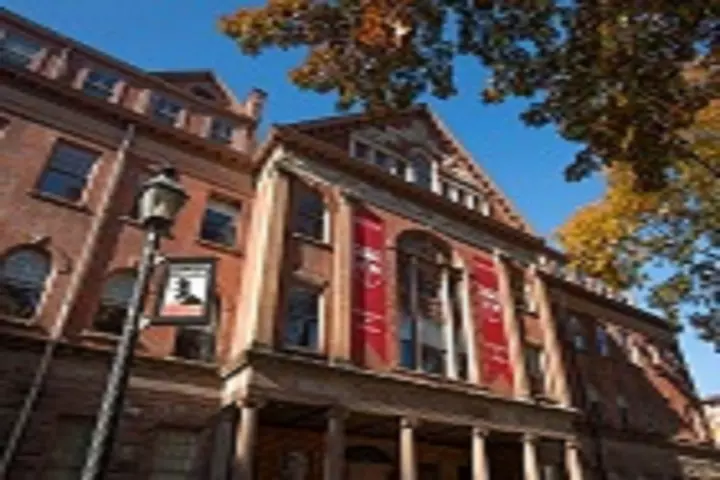

Rutgers University-New Brunswick
Overview
Rutgers University-New Brunswick is a public research university located in New Brunswick and Piscataway, New Jersey. It is the flagship campus of Rutgers, The State University of New Jersey, and a member of the Big Ten Conference and the Association of American Universities. The university offers a wide range of undergraduate, graduate, and professional programs across disciplines including the sciences, engineering, humanities, business, and public policy. With multiple campuses along the Raritan River, Rutgers University-New Brunswick serves a large and diverse student body. Students are often drawn to its broad academic offerings, research opportunities, Division I athletics, and its proximity to New York City and Philadelphia.
Admission Requirements
With a 58.15% acceptance rate, Rutgers University-New Brunswick is moderately selective. Applicants are expected to show good academic performance and readiness for college-level coursework. Students with consistent grades, extracurricular involvement, and a well-prepared application are typically competitive for admission.
Cost & Financial Aid
History
Rutgers University-New Brunswick was founded in 1766 as Queen’s College in New Brunswick, New Jersey, making it one of the oldest colleges in the United States. Established by the Dutch Reformed Church, the institution aimed to educate ministers and civic leaders in the American colonies. Instruction began in 1771, and the first degree was awarded in 1774. In 1825, the school was renamed Rutgers College in honor of benefactor Henry Rutgers. During the 19th century, it expanded its curriculum and became New Jersey’s land-grant institution in 1864 under the Morrill Act. Rutgers transitioned from a private college to a public university in the mid-20th century, formally becoming The State University of New Jersey in 1945 and 1956. Today, Rutgers University-New Brunswick is the flagship campus, reflecting more than 250 years of institutional growth and academic development.
Campus life
Gender
Race & ethnicity
Rutgers University-New Brunswick has a 16:1 student-to-faculty ratio, providing a balance between personalized instruction and a broader classroom environment. Students can expect opportunities to engage with professors while also benefiting from diverse perspectives in class discussions.
Applying to Rutgers University-New Brunswick with Unive
Applying to Rutgers University-New Brunswick involves submitting an online application, academic transcripts, and any program-specific requirements. As the flagship public research campus of Rutgers, admissions consider coursework rigor, academic performance, and extracurricular involvement. Certain majors may have additional criteria. Prospective students should review deadlines carefully and ensure all materials are submitted on time to be considered for their intended entry term at Rutgers University-New Brunswick.
Financial Aid at Rutgers University-New Brunswick
Rutgers University-New Brunswick offers financial aid through federal and state grants, scholarships, loans, and work-study programs. New Jersey residents may qualify for state-based assistance, while merit scholarships are available for academically strong applicants. Students are encouraged to complete the FAFSA and explore institutional scholarship opportunities to help manage the cost of attending Rutgers University-New Brunswick.
Build a Stronger Application with Unive
Unive helps students strengthen their Rutgers University-New Brunswick applications with AI-powered guidance. From refining essays to shaping extracurricular strategy and positioning academic interests effectively, students receive structured support at every step. Unive also assists with financial aid discovery, helping applicants identify scholarship and grant opportunities that align with their goals.
Ready to Apply to Rutgers University-New Brunswick?
Join thousands of students using Unive to craft standout applications for their dream schools.
Add to My College List


Is the information about Rutgers University-New Brunswick accurate and helpful?