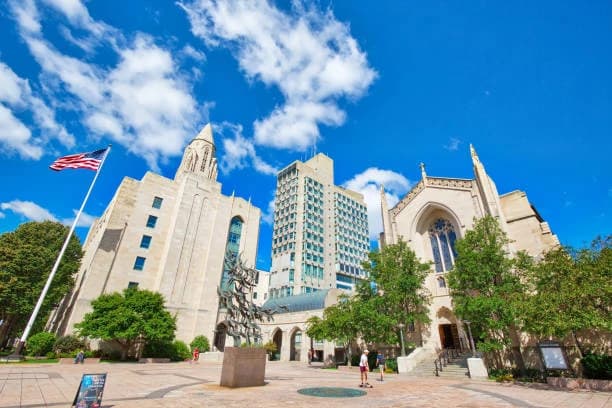

Boston University
Overview
Boston University is a private research university located in Boston, Massachusetts. Founded in 1839, it has grown into a large institution offering undergraduate, graduate, and professional programs across a wide range of disciplines, including liberal arts, engineering, business, law, medicine, and public health. The university’s main campus stretches along Commonwealth Avenue in Boston, with additional facilities in the Fenway and Medical Campus areas. Boston University is a member of the Association of American Universities and is known for its research activity and global orientation. Its diverse student body includes students from across the United States and around the world, and it attracts those interested in studying in an urban setting with access to academic, cultural, and professional opportunities.
Admission Requirements
With a 11.11% acceptance rate, Boston University is selective. Admitted students usually have strong academic records, competitive test scores, and consistent involvement in extracurricular activities. While admission is competitive, applicants who demonstrate solid academic preparation and clear interests have a realistic chance of admission.
Cost & Financial Aid
History
Boston University was founded in 1839 by Methodist leaders as the Newbury Biblical Institute in Vermont. In 1869, the institution was chartered by the Massachusetts Legislature as Boston University and moved to Boston, Massachusetts. William Fairfield Warren served as the university’s first president and helped shape its early academic structure, emphasizing liberal arts, professional education, and research. In 1872, Boston University became one of the first institutions in the United States to award a PhD to a woman. During the twentieth century, the university expanded significantly, adding new schools, research centers, and residential facilities along Commonwealth Avenue. Under presidents such as Daniel L. Marsh and John Silber, Boston University developed into a major urban research university. In 2012, it joined the Association of American Universities, reflecting its research growth. Today, Boston University continues to expand its academic programs and campus presence in Boston.
Campus life
Gender
Race & ethnicity
Boston University has a 10:1 student-to-faculty ratio, which means small class sizes and close interaction with professors. Students often benefit from more personalized attention, accessible faculty mentorship, and greater opportunities for discussion and research collaboration.
Applying to Boston University with Unive
Applying to Boston University involves a selective admissions process that considers academic achievement, coursework rigor, extracurricular involvement, essays, and recommendations. Boston University reviews applications holistically across its undergraduate schools and colleges, and students apply either through the Common Application or Coalition Application. Because Boston University is located in Boston, Massachusetts, applicants often highlight how they plan to engage with the city’s academic and professional opportunities.
Financial Aid at Boston University
Boston University offers need-based financial aid and merit scholarships to eligible students. The university has committed to meeting the full demonstrated need of qualifying domestic students, and financial aid packages may include grants, scholarships, work-study, and loans. Families applying to Boston University typically submit the FAFSA and CSS Profile to determine eligibility for institutional and federal assistance.
Build a Stronger Application with Unive
Unive helps students prepare stronger applications to Boston University through AI-powered guidance on essays, extracurricular strategy, and overall application positioning. Students can refine personal statements, clarify academic goals, and identify experiences that align with Boston University’s programs. Unive also supports financial aid discovery, helping applicants find relevant scholarships and better understand affordability options.
Ready to Apply to Boston University?
Join thousands of students using Unive to craft standout applications for their dream schools.
Add to My College List


Is the information about Boston University accurate and helpful?