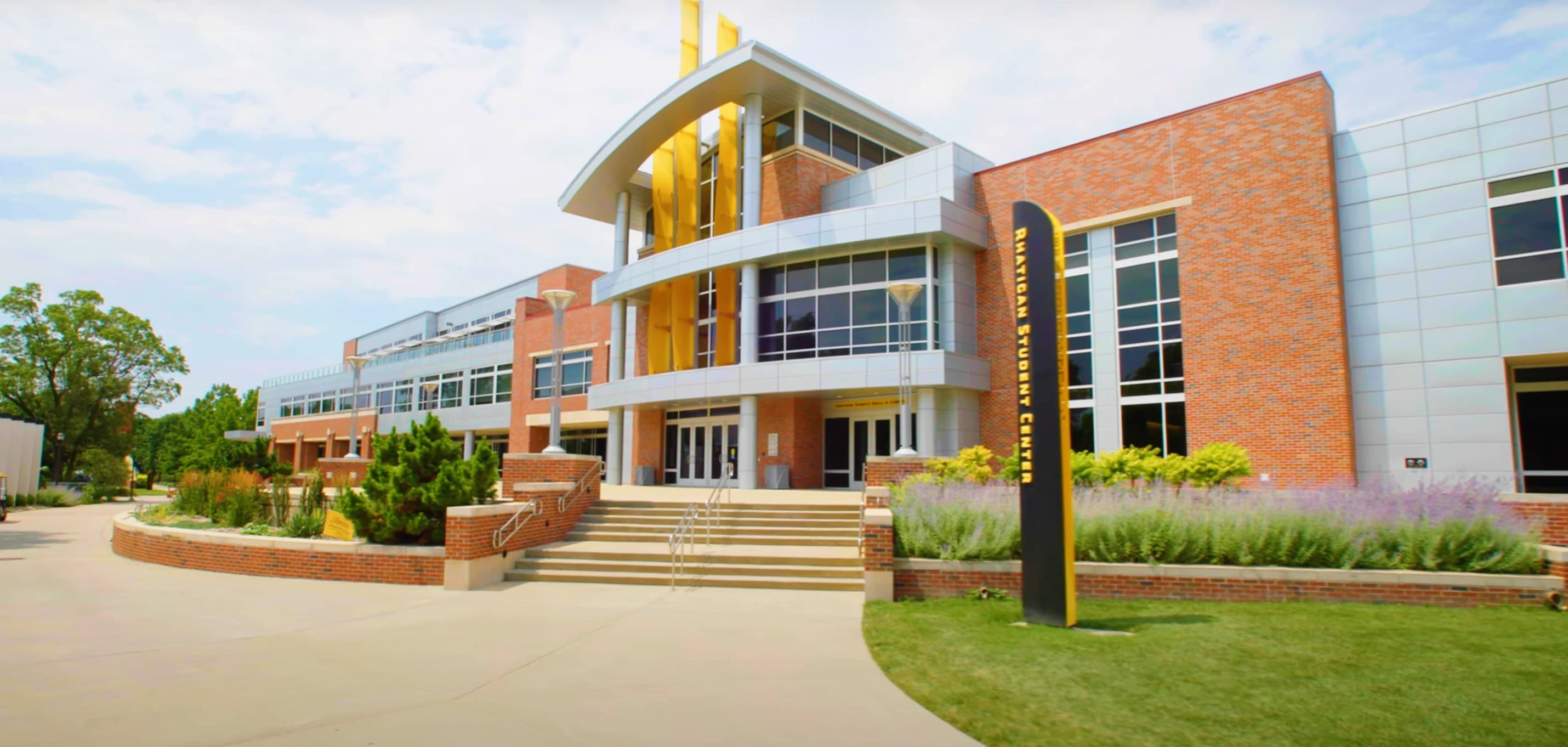

Wichita State University
Overview
Wichita State University is a public research university located in Wichita, Kansas. Governed by the Kansas Board of Regents, it serves more than 25,000 students across its main campus and technical education division, WSU Tech. The university offers a wide range of undergraduate, master’s, specialist, and doctoral programs through multiple colleges, with particular strengths in engineering, business, health professions, fine arts, and applied sciences. Classified among doctoral universities with high research activity, Wichita State University is known for its applied learning model and industry partnerships, especially through its Innovation Campus. Students are often drawn to its urban setting, research opportunities, and strong connections to aerospace and manufacturing industries in the region.
Admission Requirements
With a 93.95% acceptance rate, Wichita State University is moderately selective. Applicants are expected to show good academic performance and readiness for college-level coursework. Students with consistent grades, extracurricular involvement, and a well-prepared application are typically competitive for admission.
Cost & Financial Aid
History
Wichita State University was founded in 1895 as Fairmount College, a private Congregational institution in Wichita, Kansas. Under its first president, Nathan J. Morrison, Fairmount College offered coeducational instruction and gradually expanded its academic programs and campus facilities in the early twentieth century. In 1926, following a vote by local citizens, the institution became the Municipal University of Wichita, the first municipal university west of the Mississippi River. Continued growth led to another major transition on July 1, 1964, when the university entered the Kansas state system and adopted the name Wichita State University. In the decades that followed, Wichita State University expanded its research capacity, academic offerings, and campus footprint. Recent developments include the creation of the Innovation Campus and plans for a downtown biomedical campus, reflecting its ongoing evolution as a public research university.
Campus life
Gender
Race & ethnicity
Wichita State University has a 19:1 student-to-faculty ratio, meaning classes may be larger, especially in introductory courses. While lecture-based learning may be more common, students still have opportunities to connect with professors through office hours, discussion sections, and academic advising.
Applying to Wichita State University with Unive
Applying to Wichita State University involves submitting an online application, academic transcripts, and any required test scores or supporting materials depending on your program. Wichita State University reviews applicants based on academic preparation and readiness for college-level work. Prospective students should check specific admission requirements and deadlines for undergraduate, transfer, or graduate programs to ensure a complete application.
Financial Aid at Wichita State University
Wichita State University offers a variety of financial aid options, including scholarships, grants, work-study opportunities, and federal student loans. Students can apply for aid by submitting the FAFSA and exploring institutional scholarship programs. Wichita State University also provides guidance through its financial aid office to help students understand tuition costs, eligibility requirements, and payment planning.
Build a Stronger Application with Unive
Unive helps applicants present their strongest case to Wichita State University through AI-powered tools for essay development, extracurricular planning, and strategic application positioning. Students can refine personal statements, identify meaningful experiences to highlight, and discover relevant financial aid opportunities. By combining personalized insights with practical guidance, Unive supports applicants as they prepare competitive and well-structured applications to Wichita State University.
Ready to Apply to Wichita State University?
Join thousands of students using Unive to craft standout applications for their dream schools.
Add to My College ListIs the information about Wichita State University accurate and helpful?