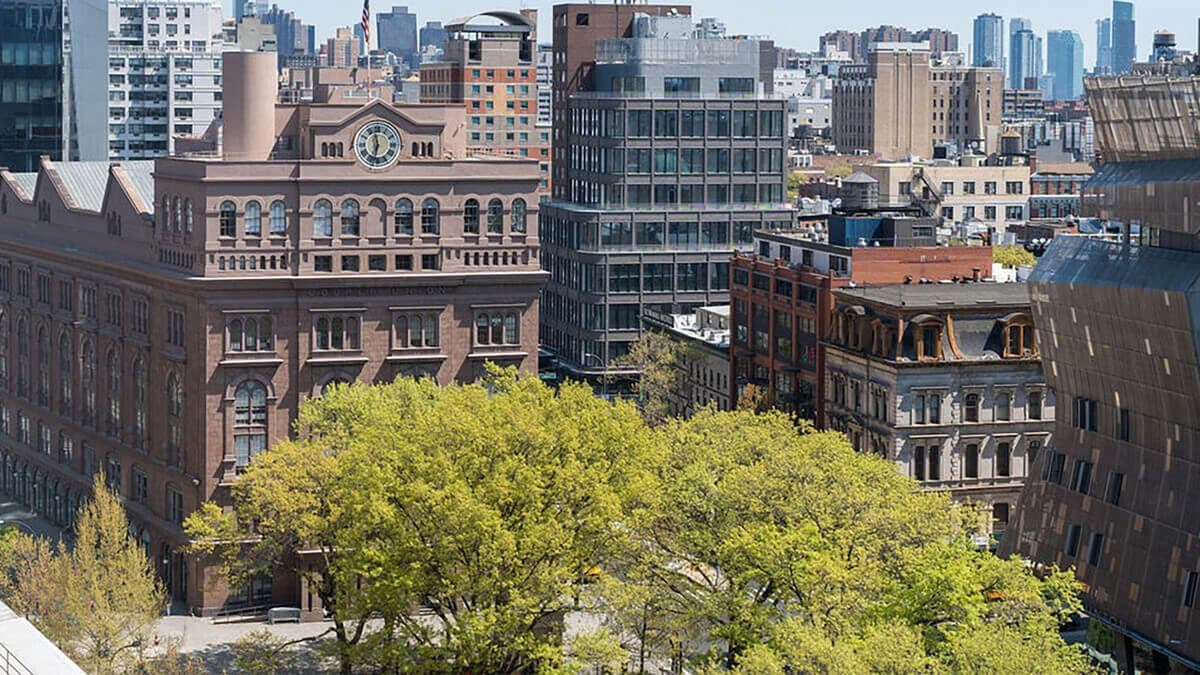

The Cooper Union for the Advancement of Science and Art
Overview
The Cooper Union for the Advancement of Science and Art is a private college located in the East Village neighborhood of Manhattan, New York City. Founded in the nineteenth century, it offers undergraduate and graduate programs in architecture, art, and engineering, supported by a core curriculum in the humanities and social sciences. The institution was established on the principle that education should be accessible based on merit, and it historically operated as a tuition-free college. Known for its small student body and specialized academic focus, The Cooper Union for the Advancement of Science and Art attracts students interested in design, creative practice, and technical fields within an urban campus setting.
Admission Requirements
With a 20.71% acceptance rate, The Cooper Union for the Advancement of Science and Art is selective. Admitted students usually have strong academic records, competitive test scores, and consistent involvement in extracurricular activities. While admission is competitive, applicants who demonstrate solid academic preparation and clear interests have a realistic chance of admission.
Cost & Financial Aid
History
The Cooper Union for the Advancement of Science and Art was founded in 1859 in New York City by industrialist and philanthropist Peter Cooper. Established to provide free education in science and art to qualified students regardless of background, the institution opened with evening classes in applied sciences and architectural drawing, as well as programs for women. Its Great Hall soon became a significant civic venue, hosting public lectures and historic speeches, including Abraham Lincoln’s address in 1860. During the late nineteenth and early twentieth centuries, The Cooper Union for the Advancement of Science and Art expanded its engineering and art programs and added a daytime engineering college in 1902. The college maintained a longstanding commitment to full-tuition scholarships until financial pressures led to tuition charges beginning in 2014. In recent years, The Cooper Union for the Advancement of Science and Art has worked to restore its founding commitment to accessible education.
Campus life
Gender
Race & ethnicity
The Cooper Union for the Advancement of Science and Art has a 8:1 student-to-faculty ratio, which means small class sizes and close interaction with professors. Students often benefit from more personalized attention, accessible faculty mentorship, and greater opportunities for discussion and research collaboration.
Applying to The Cooper Union for the Advancement of Science and Art with Unive
Applying to The Cooper Union for the Advancement of Science and Art involves a selective admissions process focused on academic achievement, creative potential, and demonstrated commitment to architecture, art, or engineering. Applicants typically submit academic transcripts, recommendations, and, for art and architecture programs, a portfolio. Because The Cooper Union for the Advancement of Science and Art has a specialized academic structure and small enrollment, prospective students should carefully prepare materials that reflect both technical skill and intellectual curiosity.
Financial Aid at The Cooper Union for the Advancement of Science and Art
The Cooper Union for the Advancement of Science and Art was founded on a mission of accessible education and historically operated as a tuition-free institution. Although tuition was introduced in 2014, the college continues to provide significant institutional scholarships and need-based financial aid. Students applying to The Cooper Union for the Advancement of Science and Art are encouraged to review financial aid policies, complete required forms on time, and explore external scholarship opportunities.
Build a Stronger Application with Unive
Unive supports applicants to The Cooper Union for the Advancement of Science and Art with AI-powered tools for essay development, portfolio planning guidance, extracurricular strategy, and application positioning. Students can refine personal statements, highlight technical and creative strengths, and identify meaningful experiences aligned with their intended field. Unive also helps families discover financial aid options and scholarship pathways, enabling applicants to present a thoughtful and well-structured application.
Ready to Apply to The Cooper Union for the Advancement of Science and Art?
Join thousands of students using Unive to craft standout applications for their dream schools.
Add to My College ListIs the information about The Cooper Union for the Advancement of Science and Art accurate and helpful?