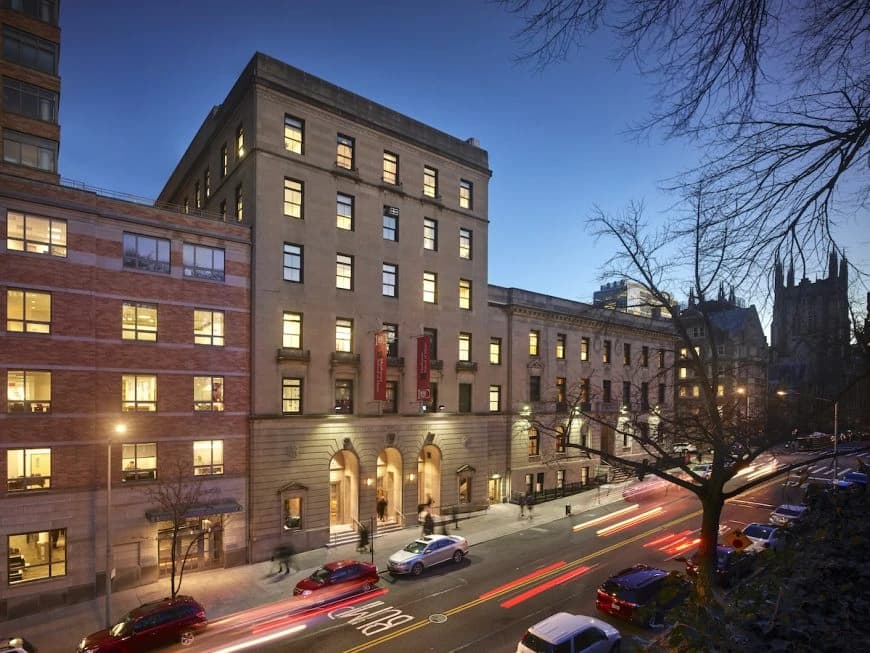

Manhattan School of Music
Overview
Manhattan School of Music is a private music conservatory located in the Morningside Heights neighborhood of New York City. Founded in 1917, it offers undergraduate, graduate, and doctoral degrees in classical performance, jazz performance, composition, conducting, and musical theatre. The campus is situated on Claremont Avenue near Columbia University and includes performance venues and student residence facilities. Originally established as a community-focused music school, it has developed into a degree-granting conservatory serving students from across the United States and internationally. Students pursuing intensive professional training in music performance, composition, and related disciplines are typically drawn to Manhattan School of Music.
Admission Requirements
With a 40.78% acceptance rate, Manhattan School of Music is moderately selective. Applicants are expected to show good academic performance and readiness for college-level coursework. Students with consistent grades, extracurricular involvement, and a well-prepared application are typically competitive for admission.
Cost & Financial Aid
History
Manhattan School of Music was founded in 1917 by pianist and philanthropist Janet D. Schenck as the Neighborhood Music School in New York City. Originally located in East Harlem, the school focused on providing community access to music education. In 1938, it adopted the name Manhattan School of Music, reflecting its expanding mission. Academic growth led to a 1943 charter amendment authorizing the Bachelor of Music degree, followed by approval of the Master of Music in 1947 and the Doctor of Musical Arts in 1974. After Schenck’s retirement in 1956, leadership under John Brownlee and later George Schick helped guide the institution’s relocation in 1969 to Claremont Avenue in Morningside Heights, near Columbia University. In the 21st century, Manhattan School of Music expanded programs in contemporary performance and musical theatre while renovating campus facilities.
Campus life
Gender
Race & ethnicity
Manhattan School of Music has a 6:1 student-to-faculty ratio, which means small class sizes and close interaction with professors. Students often benefit from more personalized attention, accessible faculty mentorship, and greater opportunities for discussion and research collaboration.
Applying to Manhattan School of Music with Unive
Applying to Manhattan School of Music requires both a formal application and a successful audition, reflecting the conservatory’s focus on performance and artistic preparation. Prospective students typically submit academic records, recommendations, and prescreening materials before being invited to audition on campus or virtually. Because Manhattan School of Music offers specialized degrees in classical music, jazz, composition, and musical theatre, applicants must demonstrate technical skill, musical interpretation, and readiness for intensive training.
Financial Aid at Manhattan School of Music
Financial aid at Manhattan School of Music includes merit-based scholarships, need-based grants, federal aid programs, and work-study opportunities. Awards are often tied to audition results as well as demonstrated financial need. Given the costs associated with conservatory study in New York City, many students combine institutional scholarships with federal or private assistance to manage tuition and living expenses.
Build a Stronger Application with Unive
Unive helps applicants prepare stronger submissions to Manhattan School of Music through AI-powered guidance on personal statements, artistic resumes, and extracurricular positioning. Students can refine essays, clarify their musical narrative, and develop a cohesive application strategy. Unive also supports financial aid discovery and scholarship research, helping prospective musicians present both their artistic strengths and their academic goals effectively.
Ready to Apply to Manhattan School of Music?
Join thousands of students using Unive to craft standout applications for their dream schools.
Add to My College ListIs the information about Manhattan School of Music accurate and helpful?