
Loyola University Maryland
Overview
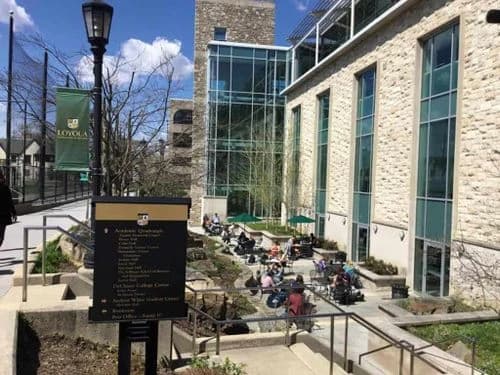
Loyola University Maryland is a private Jesuit university located in Baltimore, Maryland. Founded in 1852, it is one of the oldest Jesuit institutions of higher education in the United States. The university offers undergraduate and graduate programs through the Loyola College of Arts and Sciences, the Sellinger School of Business and Management, and the School of Education. Loyola emphasizes a liberal arts foundation shaped by Catholic and Jesuit traditions, including a focus on ethics and the education of the whole person. Its suburban Evergreen campus in northern Baltimore features historic architecture and residential facilities for undergraduates. Students are often drawn to Loyola University Maryland for its combination of liberal arts study, professional programs, and community engagement rooted in Jesuit values.
Admission Requirements
With a 75.49% acceptance rate, Loyola University Maryland is moderately selective. Applicants are expected to show good academic performance and readiness for college-level coursework. Students with consistent grades, extracurricular involvement, and a well-prepared application are typically competitive for admission.
Cost & Financial Aid
History
Loyola University Maryland was founded on September 15, 1852, as Loyola College in Maryland by Rev. John Early, S.J., and fellow members of the Society of Jesus in Baltimore. It was the first institution of higher education in the United States to bear the name of St. Ignatius of Loyola. The college initially operated from two townhouses in downtown Baltimore before relocating in the nineteenth century. In 1921, Loyola established its Evergreen campus in northern Baltimore, which became the center of its academic and residential life. Over the twentieth century, Loyola University Maryland expanded its academic offerings and introduced graduate programs. Reflecting this growth, the institution officially changed its name to Loyola University Maryland in 2009. Today, Loyola University Maryland continues its Jesuit educational mission while operating as a comprehensive university with undergraduate and graduate schools.
Campus life
Gender
Race & ethnicity
Loyola University Maryland has a 12:1 student-to-faculty ratio, providing a balance between personalized instruction and a broader classroom environment. Students can expect opportunities to engage with professors while also benefiting from diverse perspectives in class discussions.
Applying to Loyola University Maryland with Unive
Applying to Loyola University Maryland involves submitting an undergraduate application, academic transcripts, and supporting materials that reflect a student’s preparation for a Jesuit liberal arts education. Loyola University Maryland reviews applicants holistically, considering coursework, academic performance, extracurricular involvement, and personal qualities that align with its mission. Prospective students should review current deadlines, admission requirements, and program-specific expectations when preparing their application.
Financial Aid at Loyola University Maryland
Loyola University Maryland offers a range of financial aid options, including merit-based scholarships, need-based grants, federal and state aid, and student loans. Many students at Loyola University Maryland receive some form of financial assistance to help manage tuition and related costs. Families are encouraged to complete the FAFSA and review institutional scholarship opportunities early in the admissions process.
Build a Stronger Application with Unive
Unive helps students prepare competitive applications to Loyola University Maryland by providing AI-powered guidance on essays, extracurricular strategy, and overall application positioning. Students can refine personal statements, highlight leadership experiences, and identify programs that fit their goals. Unive also supports financial aid discovery, helping applicants better understand scholarship and funding opportunities.
Ready to Apply to Loyola University Maryland?
Join thousands of students using Unive to craft standout applications for their dream schools.
Add to My College ListIs the information about Loyola University Maryland accurate and helpful?