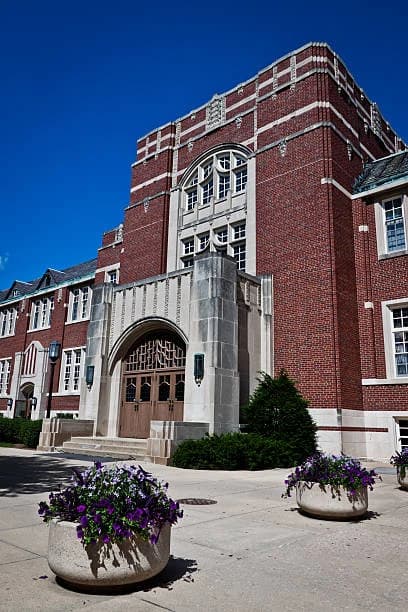

Lafayette College
Overview
Lafayette College is a private liberal arts college located in Easton, Pennsylvania, on College Hill overlooking the Lehigh Valley. Founded in 1826, the college offers undergraduate programs in the arts, sciences, social sciences, and engineering. It is one of the few liberal arts colleges in the United States to provide accredited engineering programs alongside a traditional liberal arts curriculum. Lafayette College operates as a residential institution and competes in NCAA Division I athletics as a member of the Patriot League. Students are often drawn to its combination of small class sizes, close faculty interaction, and opportunities for interdisciplinary study, research, and community engagement in a suburban campus setting.
Admission Requirements
With a 31.45% acceptance rate, Lafayette College is selective. Admitted students usually have strong academic records, competitive test scores, and consistent involvement in extracurricular activities. While admission is competitive, applicants who demonstrate solid academic preparation and clear interests have a realistic chance of admission.
Cost & Financial Aid
History
Lafayette College was founded in 1826 in Easton, Pennsylvania, when Governor John Andrew Shulze signed the college’s charter on March 9 of that year. Named in honor of the Marquis de Lafayette following his celebrated visit to the United States in 1824–1825, the institution was established by local citizens who sought to expand educational opportunity in the region. George Junkin became Lafayette College’s first president in 1832, guiding its early academic development. During the nineteenth century, Lafayette College broadened its curriculum and became one of the first American colleges to establish a chair in English language and literature. The college gradually expanded its academic offerings, campus facilities, and national profile while maintaining its liberal arts foundation. In the twentieth century, Lafayette College transitioned to coeducation in 1970 and strengthened programs in engineering and the sciences, shaping its modern identity as a residential liberal arts college with engineering.
Campus life
Gender
Race & ethnicity
Lafayette College has a 10:1 student-to-faculty ratio, which means small class sizes and close interaction with professors. Students often benefit from more personalized attention, accessible faculty mentorship, and greater opportunities for discussion and research collaboration.
Applying to Lafayette College with Unive
Applying to Lafayette College involves a selective undergraduate admissions process that considers academic preparation, extracurricular involvement, essays, and recommendations. As a residential liberal arts college in Easton, Pennsylvania, Lafayette College seeks students who demonstrate intellectual curiosity and engagement across disciplines, including the arts, sciences, and engineering. Applicants submit materials through the Common Application and may apply through different decision plans depending on their preferences.
Financial Aid at Lafayette College
Lafayette College offers need-based financial aid and is committed to meeting the demonstrated financial need of admitted students. Financial aid packages may include grants, scholarships, work-study, and limited loans. Families applying to Lafayette College typically submit required financial documents alongside the admissions application to be considered for institutional and federal aid programs.
Build a Stronger Application with Unive
Unive helps students prepare competitive applications to Lafayette College by providing AI-powered guidance on essays, extracurricular strategy, and overall positioning. Students can refine personal statements, clarify academic interests such as engineering or liberal arts pathways, and identify meaningful activities that align with Lafayette College’s values. Unive also supports financial aid discovery, helping families explore funding opportunities and present a well-prepared application.
Ready to Apply to Lafayette College?
Join thousands of students using Unive to craft standout applications for their dream schools.
Add to My College ListIs the information about Lafayette College accurate and helpful?