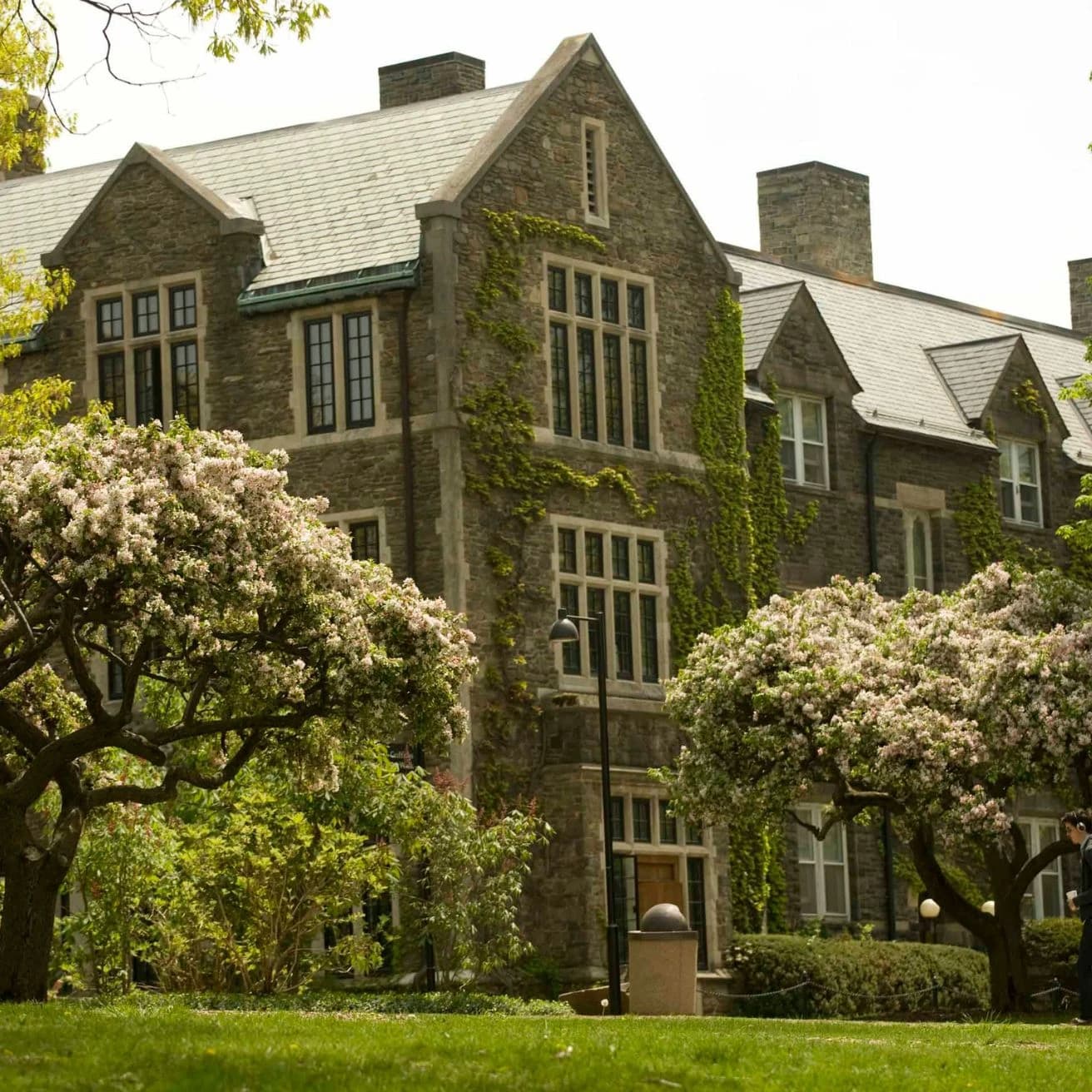

Bard College
Overview
Bard College is a private liberal arts college located in Annandale-on-Hudson, New York, along the Hudson River. Founded in 1860, it began as St. Stephen’s College and maintains historical ties to the Episcopal Church. Bard offers undergraduate and graduate programs across the arts, humanities, social sciences, and sciences, and is known for its emphasis on interdisciplinary study and the arts. The college also operates early college high school programs and international partnerships through a global network of institutions. With a rural campus setting and a focus on seminar-style instruction, Bard College attracts students interested in close faculty engagement, creative fields, and innovative academic structures.
Admission Requirements
With a 52.12% acceptance rate, Bard College is moderately selective. Applicants are expected to show good academic performance and readiness for college-level coursework. Students with consistent grades, extracurricular involvement, and a well-prepared application are typically competitive for admission.
Cost & Financial Aid
History
Bard College was founded in 1860 in Annandale-on-Hudson, New York, as St. Stephen’s College by John and Margaret Bard in partnership with leaders of the Episcopal Church. Established to educate young men for the ministry, the college initially followed a classical curriculum. George Franklin Seymour served as the first warden, the title then used for president. In 1928, St. Stephen’s became an undergraduate college of Columbia University during a period of financial strain. The institution broadened its academic scope in the early twentieth century, expanding the arts and sciences. In 1934, it was renamed Bard College in honor of its founders. Bard became coeducational in 1944 after ending its formal ties with Columbia. In recent decades, Bard College has developed early college programs, international partnerships, and new graduate initiatives, shaping its evolution as a liberal arts institution.
Campus life
Gender
Race & ethnicity
Bard College has a 9:1 student-to-faculty ratio, which means small class sizes and close interaction with professors. Students often benefit from more personalized attention, accessible faculty mentorship, and greater opportunities for discussion and research collaboration.
Applying to Bard College with Unive
Applying to Bard College involves a holistic admissions process that considers academic preparation, intellectual interests, writing ability, and personal background. Bard College accepts the Common Application and is test-optional, allowing students to decide whether to submit standardized test scores. Applicants may also complete Bard’s written supplement or alternative essay options. The admissions committee looks for students who are prepared for rigorous liberal arts study and active classroom discussion.
Financial Aid at Bard College
Bard College offers need-based financial aid and merit scholarships to support affordability. Students applying to Bard College can submit the FAFSA and CSS Profile to be considered for institutional grants, federal aid, and work-study opportunities. The college also participates in programs designed to expand access for students from diverse economic backgrounds.
Build a Stronger Application with Unive
Unive helps students prepare competitive applications to Bard College through AI-powered guidance on essays, extracurricular strategy, and overall positioning. From refining personal statements to identifying meaningful academic themes, Unive supports each stage of the Bard College application process while also helping families explore financial aid opportunities.
Ready to Apply to Bard College?
Join thousands of students using Unive to craft standout applications for their dream schools.
Add to My College ListIs the information about Bard College accurate and helpful?