What are the Benefits of AI in Personalized Education?
Nov 29, 2025
Learning tailored to each person's needs? That's what schools have chased forever. One teacher working alone with one student usually works best - going slow or fast depending on how the learner does, building on what they're good at, tapping into their passions. Yet through time, only rich or powerful folks could get that kind of help. Most kids ended up in rooms packed with 20, sometimes even 30 or more classmates; lessons had to match whoever was "in the middle," so some got lost while others zipped forward bored and untested.
AI could shake up who holds the advantage. With smart number-crunching, flexible setups, and content-creating skills, it opens doors to tailored learning - giving each student quick responses, progress based on real understanding, plus help that levels the playing field. Instead of fixed books or basic online tools from before, current AI adapts on the fly - tuning into a person's knowledge, preferred ways of picking things up, along with what keeps them going.
The good things from this change are real, not just ideas. Some first signs in schools, colleges, plus job training show better learning, fairer access, also smoother processes - just like what Benjamin Bloom called the "2 Sigma Problem" back in '84: working one-on-one helps students jump ahead by two levels. Now, smart tools might let millions gain that boost, not only a handful. Here's a close look at how AI shapes custom learning through five angles: ways to tailor lessons, routes to skill building, quick responses, fairness results, along with proof and key numbers. As we go, there'll be actual cases, roadblocks, also room to grow in the years ahead.
Personalization Models
The first thing you need to grasp about AI's perks? Check out how many different ways it can tailor things just for you.
Adaptive Learning Systems
These tools change what you see while you learn, depending on how well you're doing. Take ALEKS - it's built on ideas about how skills connect to each other. If someone struggles with complex algebra, it sends them back to basic math stuff. On the flip side, if you're doing great, you move ahead faster. DreamBox works kind of like that but focuses on math learning; it watches how much time kids take and the tricks they try before picking the next question.
Recommendation Engines
Because apps like Netflix got popular, schools started using smart tools to pick what you should learn next. Instead of one step after another, these systems offer different paths to follow. When someone learns better by watching, it could show a short video. On the flip side, if they like doing things hands-on, maybe a live quiz pops up. Over at Khan Academy, their helper called Khanmigo chats with students, asking questions or giving clues so they find exactly what fits.
Generative Companions
Generative AI flips the script - learners don't just use fixed lessons, but interact with tools that build content instantly. Take Duolingo Max: it runs chat-based drills using GPT-4. You might rehearse buying groceries or talking to a nurse in Spanish, while the system tweaks responses when you slip up, nudging your word bank further each time.
Predictive Analytics for Personalization
Institutions use AI to study big piles of data and guess what students might need. One school could spot learners likely to quit by checking how often they log in, skip homework, or their background situation. That way, counselors jump in sooner, helping with more than just grades - like life stuff too.
Every model brings its own perks - yet when combined, they form a steady flow of customization, moving from tackling specific issues to full-life support systems that monitor growth in various areas.
| Model Type | How It Works | Example Platforms |
|---|---|---|
| Adaptive Learning | Adjusts content difficulty and sequence in real time based on student performance and mastery levels | ALEKS, DreamBox, Smart Sparrow |
| Recommendation Engines | Suggests next-best content based on learning preferences, past performance, and engagement patterns | Khan Academy, Coursera, Khanmigo |
| Generative Companions | Creates personalized content on-demand including practice problems, explanations, and conversational practice | Duolingo Max, ChatGPT EDU, Ello |
| Predictive Analytics | Analyzes student data to predict risks and recommend interventions before problems escalate | Georgia State Pounce, Civitas Learning, Starfish |
| Intelligent Tutoring Systems | Provides step-by-step guidance, hints, and scaffolding that mimics human tutoring behavior | Carnegie Learning, Cognitive Tutor, Physics-STAR |
Mastery Paths
A big plus of AI in learning? It helps kids move forward only when they truly get it. In regular classes, everyone moves at once - like spending two weeks on fractions no matter what. That's how misunderstandings pile up later.
A smart tool shapes learning just for you. Take this: a flexible program breaks down one big lesson into tiny bits - like how handling fractions needs knowing least common multiples plus quick times tables. It checks every small step is solid before going ahead. When someone struggles, it loops back or offers new ways to understand.
This idea reminds us of Bloom's well-known "2 Sigma Problem" - pupils with one-on-one coaching did way better than others, by two full standard deviations. Since real-life tutors are hard to get and expensive, artificial intelligence offers a workaround: it can deliver skill-focused guidance to countless learners at once.
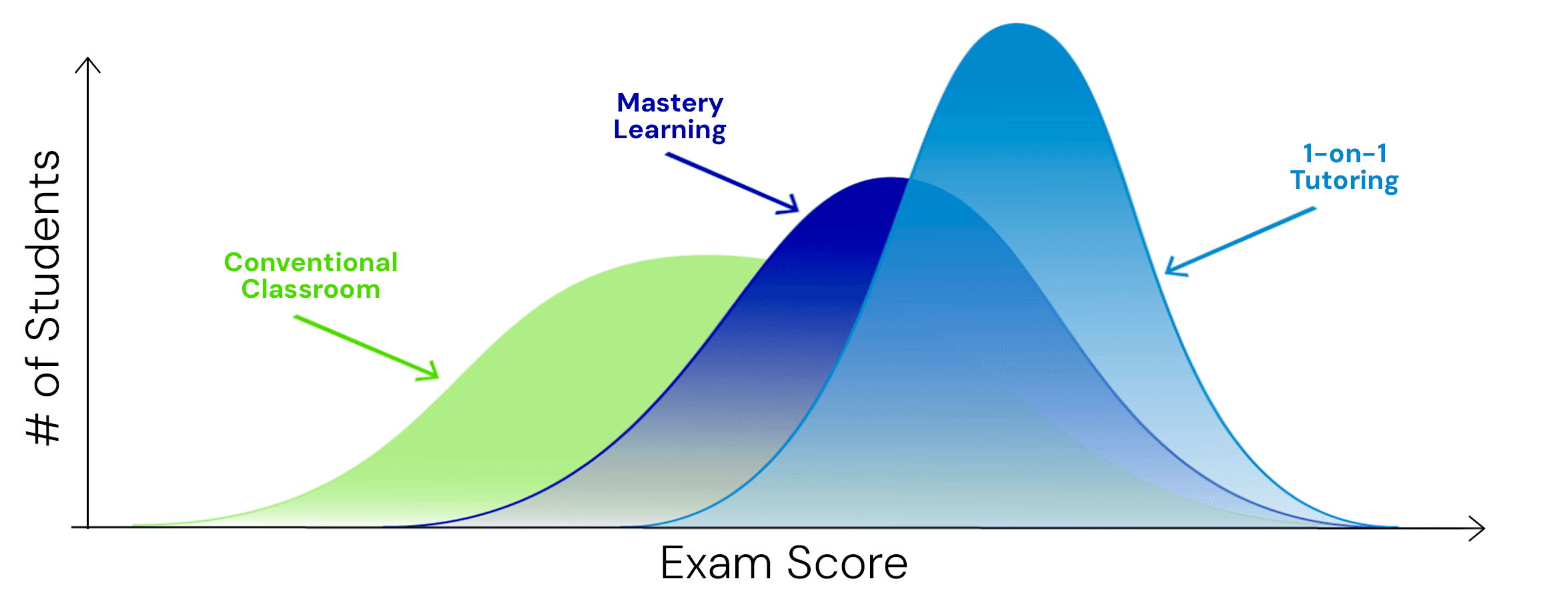
Studies show real results. A Swiss university found learners boosted test marks by 15 percentiles when studying with an AI helper in brain science. In grade schools, kids using smart math tools made two or even three months' more progress than classmates stuck with regular teaching.
Mastery paths work for grown-ups too. When adults learn or employees train at work, tools such as Coursera and ed2go try smart tech to guide progress. People aiming for job certs get help exactly where they struggle - so they actually understand, instead of just ticking boxes.
The good thing? No learner gets pushed ahead too soon, yet none get stuck without reason. Gaps shrink while progress speeds up at once.
Feedback Loops
Getting useful replies fast helps learners a lot. But in regular setups, those replies come late or not at all. A student turns in an assignment, then waits days to get it back - by then mistakes feel normal. Educators often can't write personal notes for every pupil because there's just too much work.
AI changes how things work by sparking fast back-and-forth responses over time.
When writing, apps such as Grammarly EDU or Turnitin Draft Coach show mistakes right away - like unclear parts, grammar slips, awkward tone, missing sources. As students fix drafts on the spot, they pick up skills while typing.
With STEM, tools such as Socratic let users take a picture of a tricky math or science question. Instead of just showing the result, it walks through each part step by step. Hints are shared along the way - helping learners think things through without handing them answers outright.
Generative AI turns feedback into a chat-like experience. Using tools such as Khanmigo, learners speak through their thinking while getting nudges shaped like questions - "What made you pick that move? How about trying something different?" That boosts self-awareness instead of only fixing mistakes.
Teachers gain too. Thanks to AI dashboards, class results come together in one place - showing where students get confused. Rather than checking each answer by hand, they quickly notice most kids messed up the quadratic formula, so they can jump in with a quick review session.
The big plus? A faster way to learn - try something, get quick reactions, tweak it, then try again. Kids jump into fixing their work instead of just waiting around for old-school grades.
Equity Impacts
AI could change fairness in big ways - when used carefully. Schools worldwide face unfairness because supplies aren't shared equally, no matter where you live, how much money your family makes, or what language you speak.
AI might close such gaps through various methods.
Scalable Tutoring
Fewer families could afford private tutors before. But now, smart tools like AI might even things out. Take GSU's Pounce - it shot off reminders to students from tough backgrounds, helping them fill out aid paperwork. Because of that push, more got their FAFSA done on time and fewer dropped out before starting.
Multilingual Access
Apps such as Microsoft Immersive Reader or Google Translate built into classroom tech help kids view lessons in their first tongue. So, those who don't speak English fluently can join in without falling behind - while also picking up the local language bit by bit.
Accessibility for Disabilities
Text-to-speech that uses smart tech, along with subtitles and flexible layouts, helps students who have dyslexia, trouble focusing, or issues seeing or hearing. These aids make quick custom changes on the spot - so there's less embarrassment and no need to rely on special materials.
Data-Informed Equity Interventions
Predictive analytics might show where unfairness hides. Say dropouts are more often flagged in first-gen learners - schools could then step in with specific help. That kind of insight shines a light on gaps, yet also hands down practical ways to fix them.
Sure, there's still danger. When AI needs costly gear or fast web access, it might deepen gaps instead of shrinking them. In case training data carries prejudice, the tech may unintentionally harm overlooked communities. That's why UNESCO pushes schools to put fairness first - focus on solid setup, fair inclusion, and clear methods.
Used wisely, AI levels the playing field - giving personal help to learners who'd miss out otherwise.
KPIs & Evidence
To turn AI personalization from idea into action, schools need to watch real results. Because KPIs show if the tech actually works or not.
Learning Outcomes
Metric results show better test ranks, more classes finished, also higher student stay rates. Over at UniDistance Suisse, smart tutoring lifted exam marks by 15 percentiles. Meanwhile, Nicholls State used AI prompts that kept 52 learners enrolled - equaling around $136K in fees.
Engagement
Data points cover how long students stay on task, how often they finish assignments, also how much feedback each one gets. When learners spend more time doing work instead of sitting around waiting, then the AI's actually helping.
Equity
Institutions keep an eye on progress markers - do struggling groups catch up? At Georgia State, a simple bot helped narrow imbalances by lifting results for poorer students.
Teacher Efficiency
A different KPI? Time saved. When grading takes 30% less effort, teachers can shift focus - spending extra minutes coaching students individually. That's a real gain.
Trust & Satisfaction
How students and teachers see AI matters - does it seem useful, just, or right? One thing might boost results while breaking confidence, which won't last long.
| KPI Category | What's Being Measured | Example |
|---|---|---|
| Learning Gains | Exam score jumps, how many finish class, info sticking around, better grades over time | UniDistance Suisse – Used AI help in brain science classes, saw a 15-point boost in test rankings |
| Activity Level | Time spent working, homework turned in, times each learner asks for hints or replies | Khanmigo data – Learners pose more queries, stay engaged longer during study sessions |
| Fair Access | Progress differences between struggling groups and others, tracking if support helps close the gap | Georgia State's Pounce program – Helped lower-income students catch up, narrowed achievement imbalances |
| Teaching Load | Less time marking papers, more room for personal check-ins, fewer routine chores piling up | Pioneering teachers say – Shaved off 3 to 5 hours every week on planning and corrections |
| Reliability & Likes | How learners and instructors feel about usefulness, balance, honest usage | Even if scores go up, tools that lose goodwill won't last |
| Money Impact | Income kept by holding onto students, less spending fixing gaps, higher numbers walking at graduation | At Nicholls State – An AI helper kept 52 enrolled who might've left, adding $136K back to budget |
The OECD's AI in education work focuses on mixing number-based measures with descriptive insights - so schools can check progress from different angles. This way, decisions about adopting tech aren't based just on scores but also on real classroom experiences, helping get a fuller picture without leaning too hard on one method.
Conclusion
The perks of using AI in custom learning add up fast. Because adaptive setups adjust on the fly, students get support right at their level. With mastery-based routes, missing pieces get filled while real growth happens. Since feedback keeps things moving, kids learn quicker without stalling. Shares open doors to help that used to go only to the rich. While targets show what's working when growing step by step.
Yet gains don't just happen on their own - smart planning plays a big role. Setting up solid systems matters just as much as clear decision-making. Ethics need constant attention, woven into every step. Most importantly, tailoring learning should focus on learners while backing teachers. Instead of swapping out instructors, tech ought to boost their impact.
If pulled off right, AI could turn strong, one-on-one learning into something common instead of rare. What's on the table isn't just speed - it's fairness and real help - letting each student move how they need, getting advice that fits where they are.
Tom

Tom is COO at Unive. He manages day-to-day operations and ensures seamless delivery of services to help students navigate their college application journey.
See more