Generative AI in Education
Nov 18, 2025
The Department for Education is committed to supporting responsible technology adoption in schools and colleges. Generative AI represents significant opportunities to better deliver education and improve learner outcomes. When implemented safely and with appropriate governance structures, AI has the potential to enhance quality teaching and support our mission on educational equity.
If used responsibly, with appropriate safeguards and infrastructure, generative AI has the potential to help every learner—no matter their background—receive effective support and acquire crucial skills. Our guidance on implementing AI in education provides comprehensive support for safe and effective deployment. AI has the potential to transform education in a way that frees the teacher up to instruct. This is a paradigm shift in how we use technology to improve results and tap into the potential of AI-assisted practice in the classroom.
To realize this opportunity, we will continue to explore these technologies carefully so that we balance innovation with maximizing benefit to learners and staff.
Generative AI has already demonstrated capacity for reducing administrative burden on education professionals. Research suggests AI could support lesson planning, feedback provision, and resource development.
Evidence on impacts and risks of direct pupil-facing AI applications is still developing. We will continue to collaborate with education providers in order to understand effective and safe implementation approaches.
We will:
- Assess risks and challenges along with opportunities and benefits
- Ensure technology safety, reliability and educational appropriateness
- Address the fundamental barriers, like digital infrastructure and staff training.
This position is informed by:
- Generative AI in education: stakeholder consultation findings
- Educator and Technical Expert Perspectives on AI Implementation
- Case studies of implementation from early adopter schools and colleges
- Parent and pupil attitudes toward the use of AI in education
What is Generative AI
Generative AI is technology that generates new content based on patterns it learned from its training data. Major tools, such as ChatGPT, Microsoft Copilot, and Google Gemini, have large language models that can comprehend and compose human-like responses.
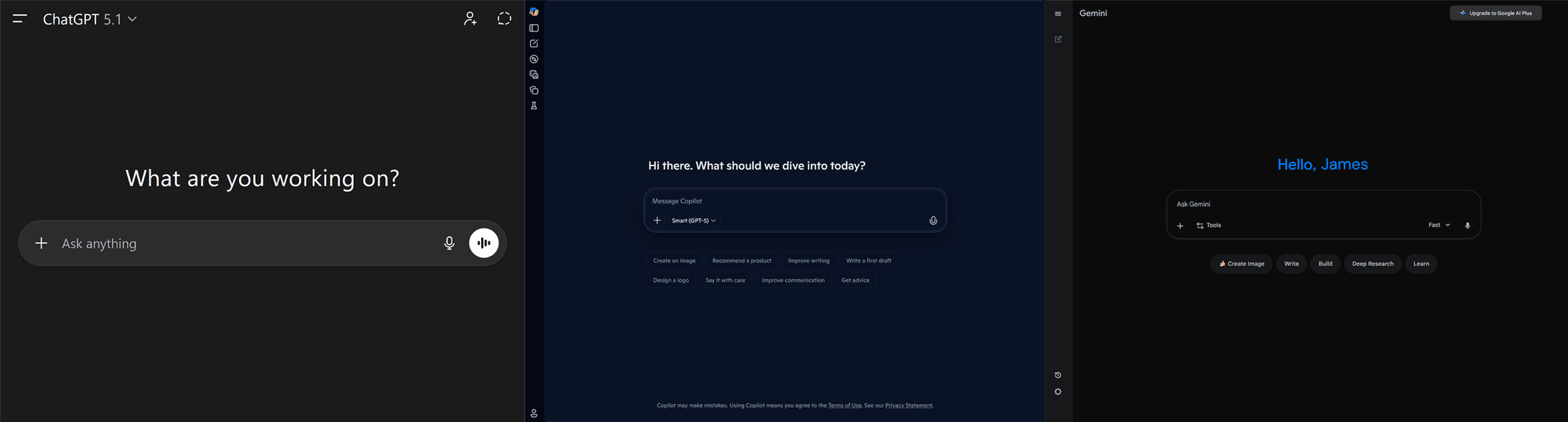
These tools can:
- answer questions and give explanations
- perform all writing exercises and text production
- produce images, code and multimedia content
- respond to prompts in conversational formats
Other generative AI applications can produce audio, simulations, and video content.
AI technology continues developing rapidly. This creates both opportunities and challenges requiring careful consideration by educational institutions.
Explore how AI can enhance your college application process
Unive.ai uses responsible AI technology to provide personalized guidance and support.
Try for free
Opportunities and Challenges
We have limited evidence on the impact of AI use on learner development, the relationship between AI use and educational outcomes, and the safety implications of pupils using this technology.
We are working with the education sector, technology providers, experts and researchers to build evidence and support safe, responsible and effective AI use.
From our research and sector engagement, we have identified that generative AI could support:
- creating educational resources and materials
- lesson and curriculum planning activities
- tailored feedback and revision support
- administrative task completion
- personalized learning approaches
When used appropriately, generative AI has potential to:
- reduce workload across the education sector
- free teacher time for direct instruction
However, AI-generated content may be:
- inaccurate or factually incorrect
- inappropriate or unsafe for learners
- biased or culturally insensitive
- lacking proper permissions or attribution
- outdated or unreliable
- lower quality than professionally developed materials
This happens because generative AI:
- Returns results based on training data, which might not align to curriculum requirements.
- Stores and processes input data that may have privacy implications.
- may yield results incomparable to human-designed educational resources
- can generate believable but false information, known as hallucination
- may provide instructions for inappropriate or harmful activities
We see more immediate benefits and fewer risks from staff-facing AI applications.
If schools and colleges choose to use pupil-facing generative AI, they must ensure compliance with legal responsibilities including:
- data protection requirements
- safeguarding obligations
- intellectual property law
They should also consider possible impacts on learning, the importance of teacher-learner relationships, and risks of bias and misinformation.
Teachers, leaders and staff must apply professional judgement when using these tools. Any AI-generated content requires critical review for appropriateness and accuracy. Responsibility for final content quality remains with the professional and their institution, regardless of tools used.
Technology, including generative AI, should not replace the essential relationship between teachers and learners.
Using AI Safely and Effectively
Safety should be the priority when considering generative AI use in educational settings.
Any use by staff, students or pupils should be carefully assessed, evaluating benefits and risks within the specific educational context. The intended use should have clear benefits that outweigh identified risks. Different considerations apply depending on whether staff or pupils are using AI tools.
Safety should not be compromised. Schools and colleges should also consider that staff or pupils may use generative AI in ways not explicitly approved by the institution.
Risk assessments should include plans for mitigating unauthorized use cases. Students may use AI to create realistic communications that appear to originate from the school.
Schools and colleges are free to determine the most suitable AI use cases for their settings, provided they comply with statutory obligations including safeguarding requirements.
Settings may choose to:
- use AI tools only with teaching staff
- limit AI use to administrative tasks
- permit AI use with students in particular subjects or year groups only
Pupils should only use generative AI with appropriate safeguards including close supervision and tools with safety, filtering and monitoring features.
For any AI use, schools and colleges should:
- comply with age restrictions set by AI tools and platforms
- consider online safety when developing safeguarding policies and procedures
- consult safeguarding guidance and requirements
- refer to product safety expectations for AI tools
- ensure appropriate filtering and monitoring systems are in place
Schools and colleges may wish to review homework policies and guidance on unsupervised study to account for AI availability. This may include developing guidance on acceptable AI use for educators, students and pupils. Settings may also consider how to engage parents regarding AI tool use.
Write authentic college essays with responsible AI support
Unive.ai helps you craft compelling essays while maintaining academic integrity.
Try for free
Data Privacy
Organizations must understand data privacy implications when implementing AI systems.
Personal data needs to be protected by legislation regarding data protection. It is very important not to use personal data on external AI platforms.
If it is necessary to use personal data in AI tools within a setting, then organizations should ensure full protections, including:
- compliance with data protection legislation
- alignment with institutional privacy policies
- transparency of data processing to the data subjects
Educational providers should:
- be transparent regarding automated decision-making and profiling
- make sure pupils and parents understand how personal data is processed
- obtain appropriate agreement for data use in AI applications
- document data processing activities and purposes
Find out more about data protection requirements through guidance on data protection in educational settings.
Intellectual Property
Organizations must understand intellectual property implications when using AI tools.
Materials protected by copyright can only be used for AI training with permission from the copyright holder, or where a statutory exception applies.
Materials created by pupils and teachers may constitute copyright material. Copyright law is distinct from data protection law, so consents for personal data are separate from copyright compliance.
Many free AI tools use user inputs to train and refine models. Some tools allow users to opt out of input use for training purposes.
Examples of original creative work include:
- essays, homework or materials written or drawn by students
- lesson plans created by teachers
- prompts entered into AI tools
Permission to use
Schools and colleges must not allow student original work to be used for AI model training without permission, or unless an exception to copyright applies.
Permission would need to be obtained from:
- the student as copyright owner
- the student's parent or legal guardian if the student is unable to consent
Secondary infringement
Schools and colleges should be aware of secondary infringement risk. Schools and colleges should be aware of the risk of secondary infringement, which could occur if AI products trained on unlicensed material produce outputs used in educational settings or published more widely.
Examples may include:
- publishing AI-created policies derived from other institutions' materials without permission
- using AI-generated images created using copyrighted source material without authorization
Find out more about intellectual property and copyright through official guidance resources.
Assessment Considerations
Schools, colleges and awarding organizations must take reasonable steps to prevent malpractice involving AI use.
Guidance on AI use in assessments provides information to help prevent and identify potential malpractice. This includes information on:
- what constitutes AI misuse and examples of malpractice
- requirements for preventing and detecting malpractice
- AI use and marking considerations
- available AI tools including detection tools
Academic integrity
AI presents challenges for traditional assessment approaches. Students can use AI to generate essays, complete problem sets or produce other work.
Institutions are responding through various approaches:
- updating integrity policies to require disclosure of AI use
- promoting assessment types that are more difficult to complete using AI, such as oral assessments, portfolios or supervised work
- redesigning assignments to take explicit account of AI, including student tasks that involve critiquing or improving AI output
Policies should differentiate between various AI use cases, including:
- Brainstorming/idea generation may be allowed, provided disclosure is made.
- Editing or proofreading assistance can be accepted with proper citation.
- full assignment generation, normally not allowed
Clear guidance allows students to know what to expect and avoid integrity violations.
The Future for AI in Education
Investment and development
We are investing in resources to facilitate safe, responsible and effective AI use in education.
We have funded development of AI tools for teachers to support lesson planning and reduce workloads. AI-powered lesson assistants are now available for teacher use.
Content pilots are making available the underpinning materials needed for effective AI educational tools. Innovation funding supports development of tools to reduce feedback and marking burden on teachers.
We are piloting an evidence board bringing together experts to assess and evaluate evidence that educational technology tools have positive impact on teaching and learning.
Research into how early adopter schools and colleges are using AI provides insights into how leaders navigate challenges and realize benefits. Key findings include:
- AI champions play crucial roles in supporting staff adoption
- leaders highlight workload reduction benefits for lesson planning, resource creation and administrative tasks
- interviewed leaders prioritize safe, ethical and responsible AI use for staff and pupils
We continue seeking opportunities to engage young people and parents directly on policy development.
We will continue working with teachers, leaders, support staff and experts to:
- consider and respond to implications of AI and emerging technologies
- support schools to teach computing curriculum that prepares pupils for society and the workplace
Apply to your dream colleges safely with Unive.ai
Unive.ai helps you navigate college applications with responsible AI that follows standards.
Try for free
Further Information
Planning tools are available to help schools benchmark against digital standards and receive guidance on meeting requirements.
Guidance is available on AI and public sector equality duties.
Support is available through intellectual property guidance and online resources.
Find out about ongoing AI development work through government technology initiatives.
Martin

Martin is CTO at Unive. He drives innovation in AI technology and ensures our platform delivers cutting-edge solutions for college applicants.
See more